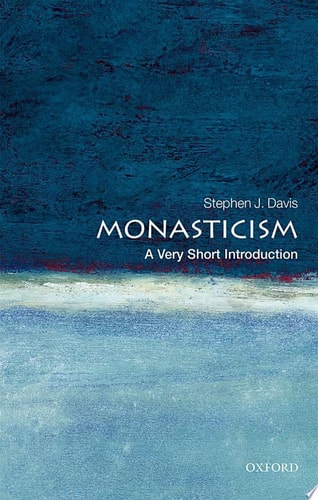
Monasticism: A Very Short Introduction
0
0
As an Amazon Associate and affiliate partner, Menrva Books earns from qualifying purchases. Learn more
Author Description
Monasticism is a social and religious phenomenon which originated in antiquity and which still remains relevant in the twenty-first century. But what, exactly, is it, and how is it distinguished from other kinds of religious and non-religious practice? In this Very Short Introduction Stephen J. Davis discusses the history of monasticism, from our earliest evidence for it, and the different types which have developed from antiquity to the present day. He considers where monasteries are located, from East Asia to North America, and everywhere in between, and how their settings impact the everyday life and worldview of the monks and nuns who dwell there. Exploring how monastic communities are organized, he also looks at how aspects of life like food, sleep, sex, work, and prayer are regimented. Finally, Davis discusses what the stories about saints communicate about monastic identity and ethics, and considers what place there is for monasticism in the modern world. ABOUT THE SERIES: The Very Short Introductions series from Oxford University Press contains hundreds of titles in almost every subject area. These pocket-sized books are the perfect way to get ahead in a new subject quickly. Our expert authors combine facts, analysis, perspective, new ideas, and enthusiasm to make interesting and challenging topics highly readable.
Menrva's Summary
THE THESIS
This book investigates the historical development, social structure, and enduring relevance of monasticism as a global religious phenomenon. Stephen J. Davis, a professor of religious studies, utilizes historical evidence and comparative analysis to define the boundaries of monastic practice. He examines how monastic communities organize daily life, ethics, and identity across diverse geographical and cultural contexts from antiquity to the present day.
THE SCOPE MAP
What You Will Find
- Historical overview of monastic origins in antiquity
- Comparative analysis of monasticism across East Asia, North America, and other regions
- Examination of daily regimentation including food, sleep, labor, and prayer
- Analysis of hagiography and the role of saints in shaping monastic ethics
Scope Limits
- Does not provide an exhaustive encyclopedia of every specific monastic order
- Does not offer a theological defense or critique of monastic life
THE AUTHORITY PERSPECTIVE
Experts and readers recognize this text as a concise, accessible entry point for students and general readers interested in the history of religious institutions. The prose is noted for its clarity and ability to synthesize complex historical data into a manageable format for non-specialists.
Page Count:
168
Publication Date:
2018-01-01
Publisher:
OUP Oxford
ISBN-10:
0191027340
ISBN-13:
9780191027345
Religion
History
Christianity
Sociology of Religion
Religious Life
Special Topics
Monasticism