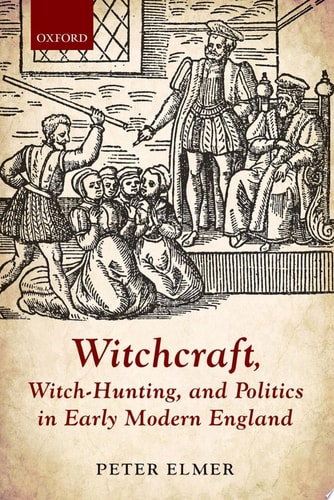
Witchcraft, Witch-Hunting, and Politics in Early Modern England
0
0
As an Amazon Associate and affiliate partner, Menrva Books earns from qualifying purchases. Learn more
Author Description
Witchcraft, Witch-hunting, and Politics in Early Modern England constitutes a wide-ranging and original overview of the place of witchcraft and witch-hunting in the broader culture of early modern England. Based on a mass of new evidence extracted from a range of archives, both local and national, it seeks to relate the rise and decline of belief in witchcraft, alongside the legal prosecution of witches, to the wider political culture of the period. Building on the seminal work of scholars such as Stuart Clark, Ian Bostridge, and Jonathan Barry, Peter Elmer demonstrates how learned discussion of witchcraft, as well as the trials of those suspected of the crime, were shaped by religious and political imperatives in the period from the passage of the witchcraft statute of 1563 to the repeal of the various laws on witchcraft. In the process, Elmer sheds new light upon various issues relating to the role of witchcraft in English society, including the problematic relationship between puritanism and witchcraft as well as the process of decline.
Menrva's Summary
THE THESIS
This book investigates the correlation between the rise and decline of witchcraft beliefs and the shifting political and religious landscape of early modern England. Professor Peter Elmer, a specialist in early modern history, utilizes a substantial collection of archival evidence from both local and national repositories to construct his argument. He posits that the legal prosecution of witches was not an isolated phenomenon but was deeply embedded in the political imperatives and religious tensions of the period spanning from 1563 to the eventual repeal of witchcraft statutes.
THE SCOPE MAP
What You Will Find
- Analysis of the 1563 witchcraft statute and its subsequent legal applications.
- Examination of the intersection between Puritanism and witchcraft beliefs.
- Investigation into the decline of witchcraft prosecutions in the English legal system.
Scope Limits
- The study focuses primarily on the English context and does not provide a comparative analysis of continental European witch-hunts.
- The text does not focus on folklore or popular superstition, prioritizing instead the learned and political discourse of the era.
THE AUTHORITY PERSPECTIVE
Scholars recognize this work as a significant contribution to the historiography of early modern England, particularly for its integration of archival data with political theory. Readers frequently note the academic density of the prose, which is intended for students and researchers of the period.
Page Count:
384
Publication Date:
2016-01-01
Publisher:
OUP Oxford
ISBN-10:
0191027529
ISBN-13:
9780191027529
History
Religious History
European History
Political History
Great Britain
Witchcraft
Legal History
Early Modern
Community Tags
Similar Books