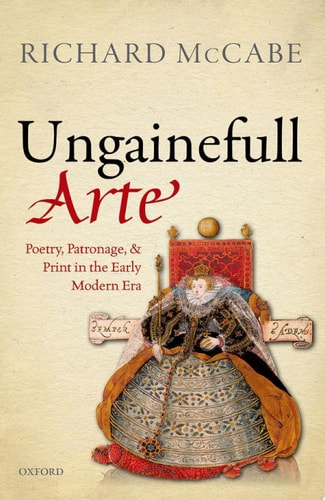
'Ungainefull Arte': Poetry, Patronage, and Print in the Early Modern Era
0
0
As an Amazon Associate and affiliate partner, Menrva Books earns from qualifying purchases. Learn more
Author Description
From antiquity to the Renaissance the pursuit of patronage was central to the literary career, yet relationships between poets and patrons were commonly conflicted, if not antagonistic, necessitating compromise even as they proffered stability and status. Was it just a matter of speaking lies to power? The present study looks beyond the rhetoric of dedication to examine how traditional modes of literary patronage responded to the challenge of print, as the economies of gift-exchange were forced to compete with those of the marketplace. It demonstrates how awareness of such divergent milieux prompted innovative modes of authorial self-representation, inspired or frustrated the desire for laureation, and promoted the remarkable self-reflexivity of Early Modern verse. By setting English Literature from Caxton to Jonson in the context of the most influential Classical and Italian exemplars it affords a wide comparative context for the reassessment of patronage both as a social practice and a literary theme.
Menrva's Summary
THE THESIS
This study investigates how the transition from traditional patronage systems to the emerging print marketplace fundamentally altered the relationship between poets and their benefactors during the Early Modern period. Richard A. McCabe, a scholar of Renaissance literature, utilizes a comparative framework that bridges Classical and Italian influences with English literary history. He argues that the tension between gift-exchange economies and commercial print markets forced authors to adopt new strategies for self-representation and professional identity. By analyzing the rhetoric of dedications, the text explores how poets navigated the conflicting demands of social status and financial viability.
THE SCOPE MAP
What You Will Find
- Analysis of the evolution of literary patronage from the era of Caxton through the time of Ben Jonson.
- Examination of the impact of print culture on traditional author-patron dynamics.
- Comparative study of Classical and Italian literary exemplars alongside English texts.
- Discussion of authorial self-reflexivity and the pursuit of laureation.
Scope Limits
- The analysis is primarily focused on the English literary tradition and its specific European influences.
- The study does not extend its primary focus beyond the early seventeenth century.
THE AUTHORITY PERSPECTIVE
Scholars recognize this work as a significant contribution to the study of Early Modern literary economies and the professionalization of authorship. Readers frequently note the academic density of the prose and the depth of the historical research provided by the author.
Page Count:
368
Publication Date:
2016-01-01
Publisher:
OUP Oxford
ISBN-10:
0191028940
ISBN-13:
9780191028946
Poetry
English & College Success
History - Modern
Literary Criticism
English
Publishing History
Community Tags
Similar Books