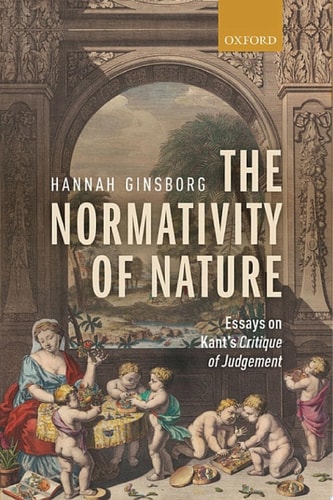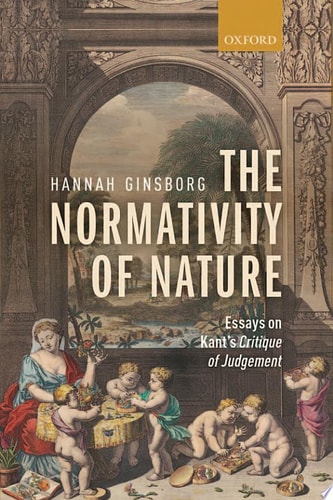
The Normativity of Nature
0
0
As an Amazon Associate and affiliate partner, Menrva Books earns from qualifying purchases. Learn more
Author Description
Most Philosophers Have Taken The Importance Of Kant's Critique Of Judgement To Lie Primarily In Its Contributions To Aesthetics And To The Philosophy Of Biology. Hannah Ginsborg, However, Sees The Critique Of Judgement As Representing A Central Contribution To The Understanding Of Human Cognition More Generally. The Fourteen Essays Collected Here Advance A Common Interpretive Project: That Of Bringing Out The Philosophical Significance Of The Notion Of Judgement Which Figures In The Third Critique And Showing Its Importance Both To Kant's Own Theoretical Philosophy And To Contemporary Views Of Human Thought And Cognition. To Possess The Capacity Of Judgment, On The Interpretation Presented Here, Is To Respond To The World In A Way Which Involves The Recognition Of One's Responses As Normatively Appropriate To The Objects Which Cause Them. It Is Through This Capacity That We Are Able Not Merely To Respond Discriminatively To Objects, As Animals Do, But To Bring Them Under Concepts And So To Make Claims About Them Which Can Be True Or False. The Critique Of Judgement, On This Reading, Rejects The Traditional Dichotomy Between The Natural And The Normative, Taking Nature Itself Both Human Nature And Nature Outside Us To Be Comprehensible Only In Normative Terms. The Essays In This Book Develop This Reading In Its Own Right, And Draw On It To Address Interpretive Debates In Kant's Aesthetics, Theory Of Knowledge, And Philosophy Of Biology. They Also Bring Out Its Relevance To Contemporary Debates About Concept-acquisition, The Content Of Perception, And Skepticism About Rule-following And Meaning.
Menrva's Summary
THE THESIS
This collection of essays investigates how the capacity for judgment, as presented in Kant's Critique of Judgment, serves as a foundational element for understanding human cognition and the relationship between nature and normativity. Hannah Ginsborg, a professor of philosophy, utilizes a rigorous interpretive framework to argue that judgment involves recognizing one's responses to the world as normatively appropriate. By bridging the gap between naturalistic responses and conceptual thought, the author posits that human cognition is inherently normative, challenging traditional dichotomies in both Kantian scholarship and contemporary philosophy.
THE SCOPE MAP
What You Will Find
- An analysis of the role of judgment in Kant's theoretical philosophy, aesthetics, and biology.
- A philosophical argument regarding the transition from discriminative response to conceptual claim-making.
- Applications of the normative reading of judgment to modern debates on perception, rule-following, and meaning.
Scope Limits
- The text does not provide a general introduction to Kantian philosophy for absolute beginners.
- It does not focus on the historical reception of the Third Critique outside of specific interpretive debates.
THE AUTHORITY PERSPECTIVE
Scholars recognize this work as a significant contribution to Kantian studies, particularly for its attempt to unify the disparate sections of the Third Critique. Readers frequently note the academic density of the prose, which requires a strong background in transcendental idealism and contemporary philosophy of mind.
Page Count:
360
Publication Date:
2014-01-01
Publisher:
Oup Oxford
ISBN-10:
0191030783
ISBN-13:
9780191030789
Philosophy
Philosophy of
Aesthetics
Epistemology
Kant
Community Tags
Similar Books