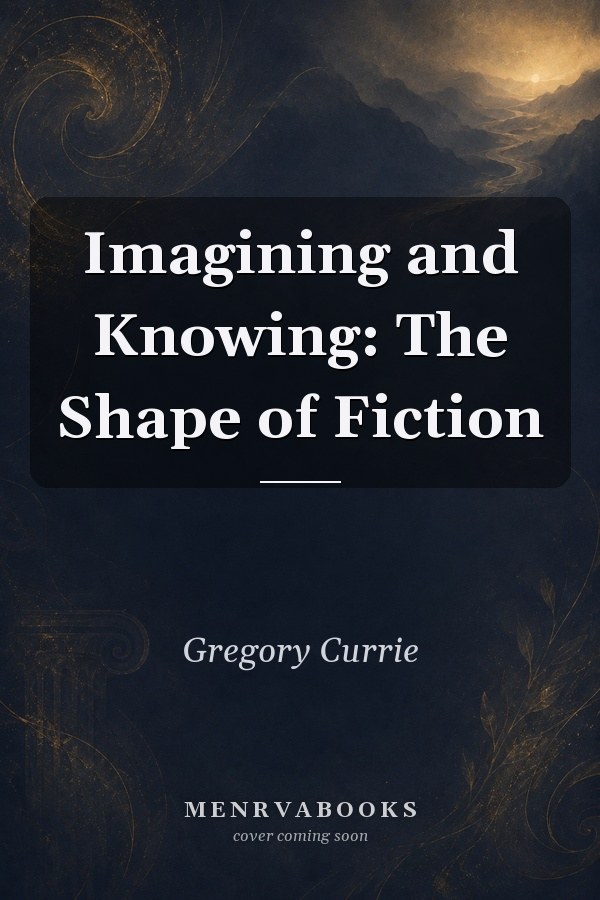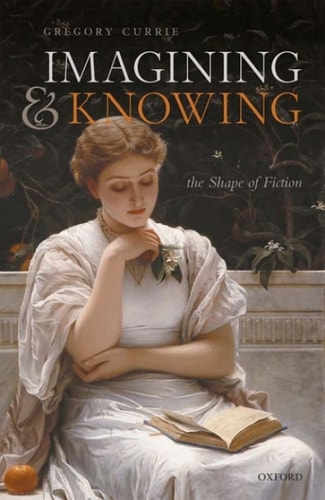
Imagining and Knowing: The Shape of Fiction
0
0
As an Amazon Associate and affiliate partner, Menrva Books earns from qualifying purchases. Learn more
Author Description
Works of fiction are works of the imagination and for the imagination. Gregory Currie energetically defends the familiar idea that fictions are guides to the imagination, a view which has come under attack in recent years. Responding to a number of challenges to this standpoint, he argues that within the domain of the imagination there lies a number of distinct and not well-recognized capacities which make the connection between fiction and imagination work. Currie then considers the question of whether in guiding the imagination fictions may also guide our beliefs, our outlook, and our habits in directions of learning. It is widely held that fictions very often provide opportunities for the acquisition of knowledge and of skills. Without denying that this sometimes happens, this book explores the difficulties and dangers of too optimistic a picture of learning from fiction. It is easy to exaggerate the connection between fiction and learning, to ignore countervailing tendencies in fiction to create error and ignorance, and to suppose that claims about learning from fiction require no serious empirical support. Currie makes a case for modesty about learning from fiction — reasoning that a lot of what we take to be learning in this area is itself a kind of pretence, that we are too optimistic about the psychological and moral insights of authors, that the case for fiction as a Darwinian adaptation is weak, and that empathy is both hard to acquire and not always morally advantageous.
Menrva's Summary
THE THESIS
This book investigates the philosophical relationship between fiction and the imagination, specifically questioning whether fiction serves as a reliable vehicle for human learning and moral development. Gregory Currie, a philosopher known for his work in the philosophy of mind and aesthetics, utilizes cognitive science and philosophical analysis to challenge the prevailing optimism regarding the educational value of literature. He argues that while fiction engages the imagination, the assumption that it consistently fosters genuine knowledge, empathy, or moral insight lacks sufficient empirical support and often relies on a form of intellectual pretense.
THE SCOPE MAP
What You Will Find
- Analysis of the cognitive capacities involved in imaginative engagement with narratives.
- A critical examination of the claim that fiction functions as a Darwinian adaptation.
- Evaluation of the psychological and moral claims often attributed to authors.
- Discussion on the limitations of empathy as a tool for moral improvement.
Scope Limits
- Does not provide a comprehensive survey of all literary theory or narrative structures.
- Does not focus on the historical evolution of specific literary genres.
THE AUTHORITY PERSPECTIVE
Scholars in the fields of aesthetics and cognitive philosophy frequently cite this work for its rigorous, skeptical approach to the intersection of literature and psychology. Readers often note the academic density of the prose, which requires a strong background in philosophical argumentation to fully navigate.
Page Count:
256
Publication Date:
2020-01-01
Publisher:
OUP Oxford
ISBN-10:
0191630640
ISBN-13:
9780191630644
Philosophy
Aesthetics
Literary Criticism
Epistemology