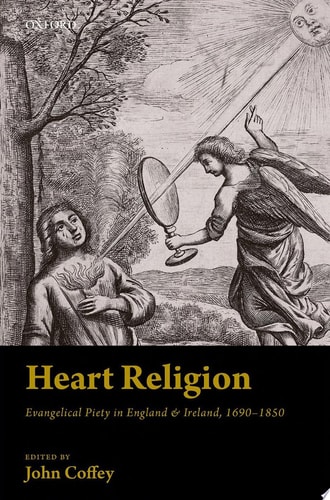
Heart Religion
0
0
As an Amazon Associate and affiliate partner, Menrva Books earns from qualifying purchases. Learn more
Author Description
The Evangelical Revival of the mid-eighteenth century was a major turning point in Protestant history. In England, Wesleyan Methodists became a separate denomination around 1795, and Welsh Calvinistic Methodists became independent of the Church of England in 1811. By this point, evangelicalism had emerged as a major religious force across the British Isles, making inroads among Anglicans as well as Irish and Scottish Presbyterians. Evangelical dissent proliferated through thousands of Methodist, Baptist, and Congregational churches; even Quakers were strongly influenced by evangelical religion. The Evangelicals were often at odds with each other over matters of doctrine (like the 'five points' of Calvinism); ecclesiology (including the status of the established church); politics (as they reacted in various ways to the American and French Revolutions); and worship (with the boisterous, extemporary style of Primitive Methodists contrasting sharply with the sober piety of many Anglican advocates of 'vital religion'). What they shared was a cross-centred, Bible-based piety that stressed conversion and stimulated evangelism. But how was this generic evangelical ethos adopted and reconfigured by different denominations and in very different social contexts? Can we categorise different styles of 'heart religion'? To what extent was evangelical piety dependent on the phenomenon of 'revival'? And what practical difference did it make to the experience of dying, to the parish community, or to denominational politics? This collection addresses these questions in innovative ways. It examines neglected manuscript and print sources, including handbooks of piety, translations and abridgements, conversion narratives, journals, letters, hymns, sermons, and obituaries. It offers a variety of approaches, reflecting a range of disciplinary expertise—historical, literary, and theological. Together, the contributions point towards a new account of the roots and branches of Evangelicalism.
Menrva's Summary
THE THESIS
This collection investigates how the generic evangelical ethos of the eighteenth-century revival was adapted and reconfigured across diverse denominations and social contexts within the British Isles. John Coffey and his contributors utilize a multidisciplinary framework to analyze how cross-centered, Bible-based piety influenced religious practice, denominational politics, and the lived experience of believers. By examining a wide array of primary sources, the authors seek to provide a nuanced account of the development of evangelicalism beyond traditional denominational narratives.
THE SCOPE MAP
What You Will Find
- Analysis of eighteenth-century evangelicalism in England, Ireland, Scotland, and Wales.
- Examination of diverse primary sources including conversion narratives, hymns, obituaries, and personal journals.
- Comparative studies of Methodist, Baptist, Congregationalist, and Anglican religious expressions.
- Discussions on the intersection of piety with political reactions to the American and French Revolutions.
Scope Limits
- The text focuses primarily on the British Isles, excluding broader global developments of the movement.
- It does not provide a comprehensive history of every individual denomination, focusing instead on the shared evangelical ethos.
THE AUTHORITY PERSPECTIVE
Scholars and historians recognize this collection as a significant contribution to the study of religious history, noting its success in bridging theological and historical methodologies. Readers frequently highlight the depth of the archival research and the clarity with which the contributors navigate complex denominational differences.
Page Count:
320
Publication Date:
2016-01-01
Publisher:
Oxford University Press
ISBN-10:
0191036102
ISBN-13:
9780191036101
History
Religion
British History
Evangelicalism
Theology
Christianity
Community Tags
Similar Books