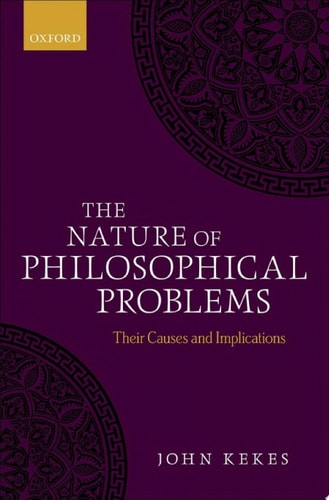
The Nature of Philosophical Problems: Their Causes and Implications
0
0
As an Amazon Associate and affiliate partner, Menrva Books earns from qualifying purchases. Learn more
Author Description
We must all make choices about how we want to live. We evaluate our possibilities by relying on historical, moral, personal, political, religious, and scientific modes of evaluations, but the values and reasons that follow from them conflict. Philosophical problems are forced on us when we try to cope with such conflicts. There are reasons for and against all proposed ways of coping with the conflicts, but none of them has been generally accepted by reasonable thinkers. The constructive aim of The Nature of Philosophical Problems is to propose a way of understanding the nature of such philosophical problems, explain why they occur, why they are perennial, and propose a pluralist approach as the most reasonable way of coping with them. This approach is practical, context-dependent, and particular. It follows from it that the recurrence of philosophical problems is not a defect, but a welcome consequence of the richness of our modes of understanding that enlarges the range of possibilities by which we might choose to live. The critical aim of the book is to give reasons against both the absolutist attempt to find an overriding value or principle for resolving philosophical problems and of the relativist claim that reasons unavoidably come to an end and how we want to live is ultimately a matter of personal preference, not of reasons.
Menrva's Summary
THE THESIS
This book investigates the fundamental causes of philosophical problems and explores why these conflicts remain perennial despite ongoing attempts at resolution. John Kekes, a philosopher known for his work on moral pluralism, utilizes a rigorous analytical framework to argue that philosophical problems arise from the inherent conflicts between diverse modes of evaluation, such as moral, political, and scientific reasoning. He proposes a pluralist approach that treats these persistent disagreements not as failures of logic, but as evidence of the richness of human understanding.
THE SCOPE MAP
What You Will Find
- A systematic analysis of why philosophical problems recur across historical contexts.
- A critique of both absolutist and relativist frameworks for resolving value conflicts.
- A defense of a practical, context-dependent, and particularist methodology for navigating life choices.
Scope Limits
- The text does not provide a singular, universal solution to specific ethical dilemmas.
- It does not offer a comprehensive history of Western philosophy, focusing instead on the nature of the problems themselves.
THE AUTHORITY PERSPECTIVE
Scholars and students of philosophy frequently identify this work as a significant contribution to metaphilosophy, particularly for its clear articulation of the pluralist position. Readers often note the academic density of the prose, which requires a foundational understanding of contemporary philosophical debates to fully grasp the author's arguments.
Page Count:
257
Publication Date:
2014-01-01
Publisher:
OUP Oxford
ISBN-10:
0191040908
ISBN-13:
9780191040900
Philosophy
Ethics
Metaphilosophy
Pluralism
Epistemology
Community Tags
Similar Books