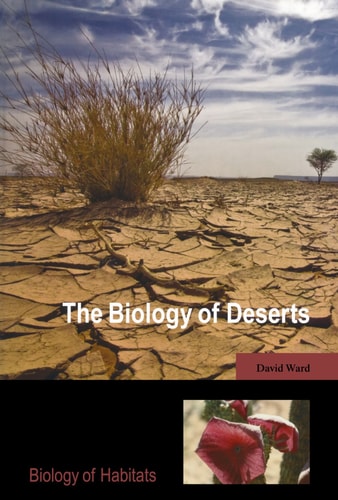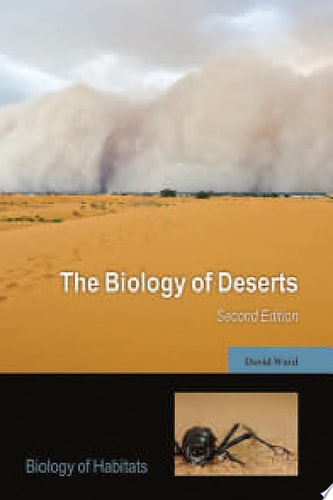
The Biology Of Deserts
0
0
As an Amazon Associate and affiliate partner, Menrva Books earns from qualifying purchases. Learn more
Author Description
This Book Offers A Concise But Comprehensive Introduction To Desert Ecology And Adopts A Strong Evolutionary Focus. As With Other Titles In The Biology Of Habitats Series, The Emphasis In The Book Is On The Organisms That Dominate This Harsh Environment, Although Theoretical And Experimental Aspects Are Also Discussed. In This Updated Second Edition, There Is A Greater Focus On The Effects Of Climate Change And Some Of Its Likely Effects On Deserts, Seeing Desertification As Among The Most Serious Results Of Climate Change, Leading Ultimately To The Increasing Size Of Arid And Semi-arid Regions. The Biology Of Deserts Second Edition Includes A Wide Range Of Ecological And Evolutionary Issues Including Morphological And Physiological Adaptations Of Desert Plants And Animals, Species Interactions, The Importance Of Predation And Parasitism, Food Webs, Biodiversity, And Conservation. It Features A Balance Of Plant And Animal (both Invertebrate And Vertebrate) Examples, And Also Emphasizes Topical Applied Issues Such As Desertification And Invasive Species. The Book Concludes By Considering The Positive Aspects Of Desert Conservation. This Accessible Textbook Is Intended For Senior Undergraduate And Graduate Students, As Well As Professional Ecologists, Conservation Practitioners, And Resource Managers Working In The Field Of Desert Ecology.
Menrva's Summary
THE THESIS
This text investigates the ecological and evolutionary mechanisms that allow organisms to survive and thrive within the extreme constraints of desert environments. The author, David A. Ward, utilizes a synthesis of physiological data, evolutionary theory, and current environmental research to frame the desert as a complex, dynamic habitat. The work argues that understanding these specific biological adaptations is critical for addressing modern challenges such as desertification and biodiversity loss in arid regions.
THE SCOPE MAP
What You Will Find
- Analysis of morphological and physiological adaptations in desert flora and fauna
- Examination of species interactions, including predation, parasitism, and food web dynamics
- Discussion of climate change impacts on arid and semi-arid ecosystem expansion
- Overview of conservation strategies and the management of invasive species
Scope Limits
- The text focuses primarily on biological and ecological principles rather than geological or meteorological processes
- While global in scope, the book prioritizes general principles over exhaustive regional case studies
THE AUTHORITY PERSPECTIVE
Experts and academic reviewers identify this text as a standard resource for senior undergraduate and graduate students in ecology. Readers frequently note that the prose balances technical rigor with accessibility, making it a reliable reference for practitioners and researchers in the field.
Page Count:
416
Publication Date:
2016-01-01
Publisher:
Oxford University Press
ISBN-10:
0191047309
ISBN-13:
9780191047305
Science
Desert Studies
Conservation
Ecology
Biology