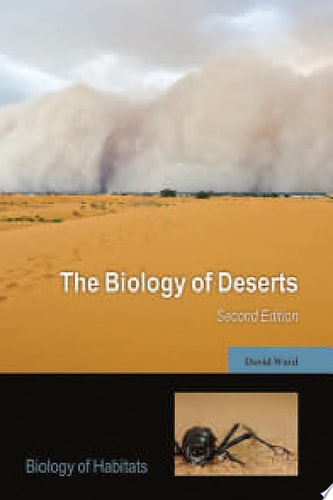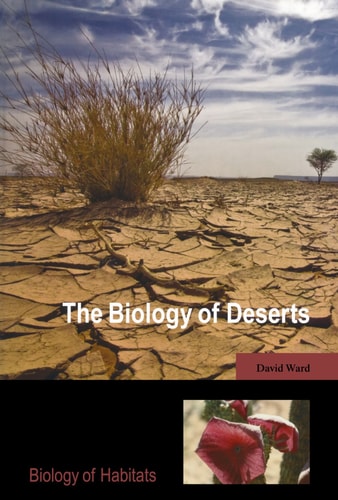
The Biology of Deserts
0
0
As an Amazon Associate and affiliate partner, Menrva Books earns from qualifying purchases. Learn more
Author Description
This book offers a concise but comprehensive introduction to desert ecology and adopts a strong evolutionary focus. As with other titles in the Biology of Habitats Series, the emphasis in the book is on the organisms that dominate this harsh environment, although theoretical and experimental aspects as well as conservation and desertification are also consideredDeserts are defined by their arid conditions; a consequence of this aridity is that most of the area occupied by desert is barren and monotonous, leading many people to regard it as wasteland. However, deserts are widespread and represent surprisingly biodiverse environments, although it is the relative simplicity of these ecosystems that makes them more tractable for study than more complex environments. In these resource-poor locations, natural selection is working at its most extreme and provides some of the best-known examples of Darwinian selection.The Biology of Deserts includes a wide range of ecological and evolutionary issues including morphological and physiological adaptations of desert plants and animals, species interactions, the importance of predation and parasitism, food webs, biodiversity and conservation. It features a balance of plant and animal (both invertebrate and vertebrate) examples, and also emphasizes topical applied issues such as desertification and invasive species. The book concludes by considering the positive aspects of desert conservation.Each of the books in the Oxford Biology of Habitats Series introduces a different habitat, and gives an integrated overview of the design, physiology, ecology, and behaviour of the organisms found there. The practical aspects of working within each habitat, the sorts of studies that are possible, and habitat biodiversity and conservation status are all explored.
Menrva's Summary
THE THESIS
This book investigates the ecological and evolutionary mechanisms that allow organisms to survive and thrive within the extreme, resource-poor conditions of desert environments. David A. Ward provides a comprehensive overview of desert ecology, utilizing a framework that balances theoretical evolutionary biology with practical field observations. By focusing on the specific adaptations of flora and fauna, the text argues that deserts serve as ideal, tractable models for studying the intense pressures of natural selection.
THE SCOPE MAP
What You Will Find
- Analysis of morphological and physiological adaptations in desert plants and animals.
- Examination of complex species interactions, including predation, parasitism, and food web dynamics.
- Discussion of applied environmental issues such as desertification and the impact of invasive species.
- Overview of biodiversity patterns and current strategies for desert conservation.
THE AUTHORITY PERSPECTIVE
Experts and students frequently identify this text as a foundational resource for understanding the specific biological constraints of arid habitats. The prose is noted for its academic clarity, making it a standard reference for those studying habitat-specific ecology and evolutionary biology.
Page Count:
339
Publication Date:
2009-01-15
Publisher:
Oxford University Press
ISBN-10:
0199211477
ISBN-13:
9780199211470
Nature
Science
Desert ecology
Biology
Ecology