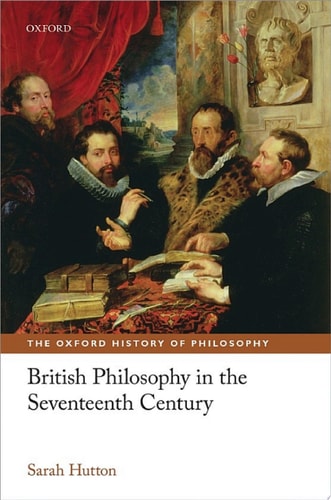
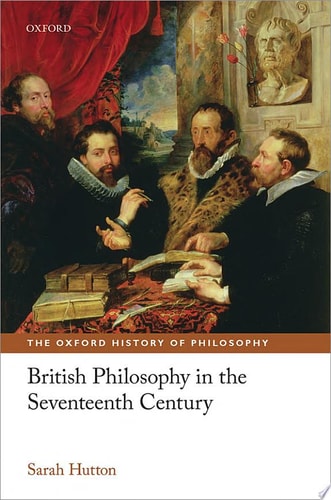
British Philosophy in the Seventeenth Century
0
0
As an Amazon Associate and affiliate partner, Menrva Books earns from qualifying purchases. Learn more
Author Description
Sarah Hutton presents a rich historical study of one of the most fertile periods in modern philosophy. It was in the seventeenth century that Britain's first philosophers of international stature and lasting influence emerged. Its most famous names, Hobbes and Locke, rank alongside the greatest names in the European philosophical canon. Bacon too belongs with this constellation of great thinkers, although his status as a philosopher tends to be obscured by his status as father of modern science. The seventeenth century is normally regarded as the dawn of modernity following the breakdown of the Aristotelian synthesis which had dominated intellectual life since the middle ages. In this period of transformational change, Bacon, Hobbes, Locke are acknowledged to have contributed significantly to the shape of European philosophy from their own time to the present day. But these figures did not work in isolation. Sarah Hutton places them in their intellectual context, including the social, political and religious conditions in which philosophy was practised. She treats seventeenth-century philosophy as an ongoing conversation: like all conversations, some voices will dominate, some will be more persuasive than others and there will be enormous variations in tone from the polite to polemical, matter-of-fact, intemperate. The conversation model allows voices to be heard which would otherwise be discounted. Hutton shows the importance of figures normally regarded as 'minor' players in philosophy (e.g. Herbert of Cherbury, Cudworth, More, Burthogge, Norris, Toland) as well as others who have been completely overlooked, notably female philosophers. Crucially, instead of emphasizing the break between seventeenth-century philosophy and its past, the conversation model makes it possible to trace continuities between the Renaissance and seventeenth century, across the seventeenth century and into the eighteenth century, while at the same time acknowledging the major changes which
Menrva's Summary
THE THESIS
This work investigates the intellectual evolution of seventeenth-century British philosophy by examining the social, political, and religious contexts that shaped its most influential thinkers. Sarah Hutton, a scholar specializing in early modern intellectual history, utilizes a conversational framework to move beyond the traditional focus on canonical figures like Hobbes, Locke, and Bacon. By analyzing the interplay between major philosophers and their lesser-known contemporaries, she argues that the period represents a continuous intellectual development rather than a sudden rupture from the past.
THE SCOPE MAP
What You Will Find
- Analysis of canonical figures including Bacon, Hobbes, and Locke
- Examination of minor and overlooked philosophers such as Herbert of Cherbury, Cudworth, and More
- Integration of female philosophers into the historical narrative
- Contextualization of philosophical discourse within seventeenth-century religious and political frameworks
Scope Limits
- Does not provide an exhaustive biography of every individual mentioned
- Does not focus on technical logical proofs outside of their historical context
THE AUTHORITY PERSPECTIVE
Scholars and students of philosophy frequently cite this text for its ability to contextualize the development of modern thought within a broader social landscape. Experts highlight the work as a valuable resource for understanding the continuity between Renaissance thought and the Enlightenment era.
Page Count:
296
Publication Date:
2015-01-01
Publisher:
OUP Oxford
ISBN-10:
019105951X
ISBN-13:
9780191059513
Philosophy
History & Surveys
Early Modern
Philosophy history
Philosophy British
British History
Intellectual History
Community Tags
Other Editions(4)

Similar Books
Reader Comments
Share Your Thoughts
No comments yet. Be the first to share your thoughts!