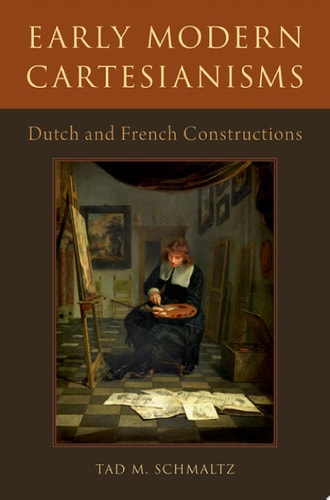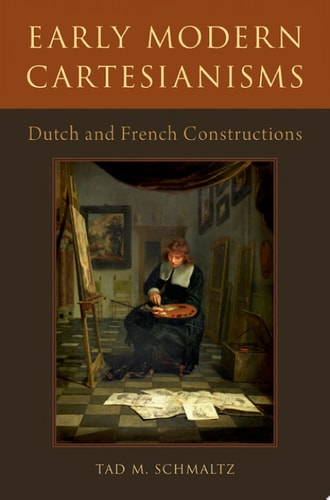
Early Modern Cartesianisms: Dutch and French Constructions
0
0
As an Amazon Associate and affiliate partner, Menrva Books earns from qualifying purchases. Learn more
Author Description
There is a general sense that the philosophy of Descartes was a dominant force in early modern thought. Since the work in the nineteenth century of French historians of Cartesian philosophy, however, there has been no fully contextualized comparative examination of the various receptions of Descartes in different portions of early modern Europe. This study addresses the need for a more current understanding of these receptions by considering the different constructions of Descartes's thought that emerged in the Calvinist United Provinces (Netherlands) and Catholic France, the two main centers for early modern Cartesianism, during the period dating from the last decades of his life to the century or so following his death in 1650. It turns out that we must speak not of a single early modern Cartesianism rigidly defined in terms of Descartes's own authorial intentions, but rather of a loose collection of early modern Cartesianisms that involve a range of different positions on various sets of issues. Though more or less rooted in Descartes's somewhat open-ended views, these Cartesianisms evolved in different ways over time in response to different intellectual and social pressures. Chapters of this study are devoted to: the early modern Catholic and Calvinist condemnations of Descartes and the incompatible Cartesian responses to these; conflicting attitudes among early modern Cartesians toward ancient thought and modernity; competing early modern attempts to combine Descartes's views with those of Augustine; the different occasionalist accounts of causation within early modern Cartesianism; and the impact of various forms of early modern Cartesianism on both Dutch medicine and French physics.
Menrva's Summary
THE THESIS
This study investigates the diverse and often conflicting ways in which the philosophy of René Descartes was interpreted and adapted within the distinct intellectual landscapes of the Dutch Republic and Catholic France. Tad M. Schmaltz, a specialist in early modern philosophy, utilizes historical analysis and comparative methodology to argue against the existence of a singular, monolithic Cartesianism. Instead, he demonstrates how varying social, religious, and academic pressures in these two regions produced a multifaceted collection of Cartesian schools of thought.
THE SCOPE MAP
What You Will Find
- Comparative analysis of Cartesian reception in the Calvinist United Provinces and Catholic France.
- Examination of the evolution of Cartesian thought from the mid-17th century through the following century.
- Investigation into the intersection of Cartesianism with theology, medicine, and physics.
Scope Limits
- The study does not provide a comprehensive survey of Cartesianism in other European regions such as England or Germany.
- It does not focus on the personal biography of Descartes beyond the context of his intellectual legacy.
THE AUTHORITY PERSPECTIVE
Scholars recognize this work as a significant contribution to the historiography of early modern philosophy, particularly for its nuanced rejection of a unified Cartesian tradition. Readers frequently note the academic density of the prose, which is intended for specialists and advanced students of 17th-century intellectual history.
Page Count:
392
Publication Date:
2016-01-01
Publisher:
Oxford University Press
ISBN-10:
0190628332
ISBN-13:
9780190628338
Philosophy
European History
History & Surveys
Philosophy history
Intellectual History
Cartesianism
Early Modern
Philosophy French
Community Tags
Similar Books