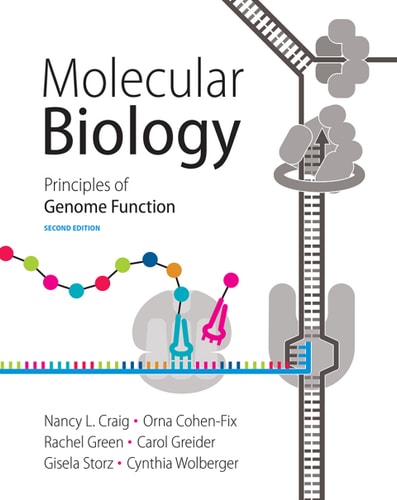
Molecular Biology: Principles of Genome Function
0
0
As an Amazon Associate and affiliate partner, Menrva Books earns from qualifying purchases. Learn more
Author Description
The biological world operates on a multitude of scales - from molecules to cells to tissues to organisms to ecosystems. Throughout all these levels runs a common thread: the communication and onward passage of information - from cell to cell, from organism to organism and, ultimately, from generation to generation. But how does this information - no more than a static repository of data - come alive to govern the processes that constitute life? The answer lies in the concerted action of molecular components which cooperate through a series of carefully-regulated processes to bring the information in our genome to life. These components and processes lie at the heart of one of the most fascinating subjects to engage the minds of scientists today: molecular biology. Molecular Biology: Principles of Genome Function offers a fresh, distinctive approach to the teaching of molecular biology. It is an approach that reflects the challenge of teaching a subject that is in many ways unrecognizable from the molecular biology of the 20th century - a discipline in which our understanding has advanced immeasurably, but about which many questions remain to be answered. It is written with several guiding themes in mind: - A focus on key principles provides a robust conceptual framework on which students can build a solid understanding of the discipline; - An emphasis on the commonalities that exist between the three kingdoms of life, and the discussion of differences between the three kingdoms where such differences offer instructive insights into molecular processes and components, gives students an accurate depiction of our current understanding of the conserved nature of molecular biology, and the differences that underpin biological diversity; - An integrated approach demonstrates how certain molecular phenomena have diverse impacts on genome function by presenting them as themes that recur throughout the book, rather than as artificially separated topics At heart, molecular bi
Menrva's Summary
THE THESIS
How do static genomic data repositories govern the complex, dynamic processes that constitute life? The authors, a team of distinguished researchers and educators, argue that life is maintained through the concerted, regulated action of molecular components, presenting a conceptual framework that emphasizes genome function over rote memorization.
THE SCOPE MAP
What You Will Find
- Comprehensive analysis of genome function across the three kingdoms of life
- Integrated thematic approach to molecular phenomena rather than isolated topics
- Conceptual frameworks designed to bridge the gap between 20th-century foundations and modern discoveries
Scope Limits
- Does not cover advanced clinical applications or specialized biotechnology protocols
- Excludes detailed historical accounts of molecular biology discoveries in favor of current principles
THE AUTHORITY PERSPECTIVE
Educators and students frequently cite this text for its ability to synthesize complex genomic interactions into a coherent, principle-based narrative. Experts highlight the book as a modern pedagogical tool that effectively moves beyond the traditional, fragmented approach to molecular biology instruction.
Page Count:
200
Publication Date:
2016-01-01
Publisher:
Oxford University Press Academic UK
ISBN-10:
0191054135
ISBN-13:
9780191054136
Science
Education
textbook
Genetics
Biology
Community Tags
Other Editions(2)
Similar Books





Reader Comments
Share Your Thoughts
No comments yet. Be the first to share your thoughts!