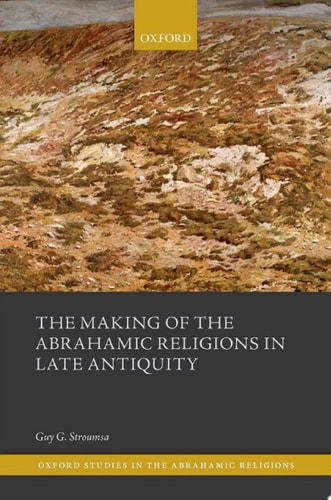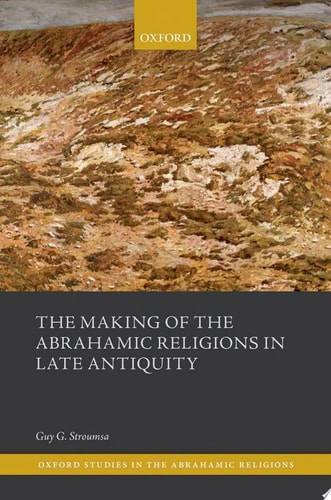
The Making Of The Abrahamic Religions In Late Antiquity
0
0
As an Amazon Associate and affiliate partner, Menrva Books earns from qualifying purchases. Learn more
Author Description
This Book Presents How Ancient Christianity Must Be Understood From The Viewpoint Of The History Of Religions In Late Antiquity. The Continuation Of Biblical Prophecy Runs Like A Thread From Jesus Through Mani To Muhammad. And Yet This Thread, Arguably The Single Most Important Characteristic Of The Abrahamic Movement, Often Remains Outside The Mainstream, Hidden, As It Were, Since It Generates Heresy. The Figures Of The Gnostic, The Holy Man, And The Mystic Are All Sequels Of The Israelite Prophet. They Reflect A Mode Of Religiosity That Is Characterized By High Intensity. It Is Centripetal And Activist By Nature And Emphasizes Sectarianism And Polemics, Esoteric Knowledge, Or Gnosis And Charisma. The Other Mode Of Religiosity, Obviously Much More Common Than The First One, Is Centrifugal And Irenic. It Favours An Ecumenical Attitude, Contents Itself With A Widely Shared Faith, Or Pistis, And Reflects, In Weberian Parlance, The Routinisation Of The New Religious Movement. This Is The Mode Of Priests And Bishops, Rather Than That Of Martyrs And Holy Men. These Two Main Modes Of Religion, High Versus Low Intensity, Exist Simultaneously, And Cross The Boundaries Of Religious Communities. They Offer A Tool Permitting Us To Follow The Transformations Of Religion In Late Antiquity In General, And In Ancient Christianity In Particular, Without Becoming Prisoners Of The Traditional Categories Of Patristic Literature. Through The Dialectical Relationship Between These Two Modes Of Religiosity, One Can Follow The Complex Transformations Of Ancient Christianity In Its Broad Religious Context.
Menrva's Summary
THE THESIS
This book investigates the transformation of religious identity in Late Antiquity by examining the continuity of biblical prophecy across the Abrahamic traditions. Guy G. Stroumsa, a scholar of comparative religion, utilizes historical analysis to argue that the evolution of Christianity, Gnosticism, and early Islam is best understood through the dialectical tension between two distinct modes of religiosity. By moving beyond traditional patristic categories, the author provides a framework for analyzing how high-intensity, charismatic movements contrast with the institutionalized, ecumenical structures of the period.
THE SCOPE MAP
What You Will Find
- A comparative analysis of religious movements from Jesus through Mani to Muhammad.
- A theoretical framework distinguishing between high-intensity (sectarian/charismatic) and low-intensity (ecumenical/priestly) modes of religion.
- Historical examination of the Gnostic, the Holy Man, and the Mystic as successors to the Israelite prophet.
Scope Limits
- The text does not provide a comprehensive history of all Abrahamic theological developments.
- The analysis focuses primarily on the structural transformations of religiosity rather than exhaustive biographical accounts of individual figures.
THE AUTHORITY PERSPECTIVE
Scholars and historians of Late Antiquity frequently cite this work for its innovative application of Weberian concepts to the study of early religious movements. Readers often note the academic density of the prose, which is intended for those familiar with the historical and theological nuances of the period.
Page Count:
248
Publication Date:
2015-01-01
Publisher:
Oup Oxford
ISBN-10:
0191059129
ISBN-13:
9780191059124
History
Religion
Theology
Late Antiquity
Christianity