Myths on the Map
0
0
As an Amazon Associate and affiliate partner, Menrva Books earns from qualifying purchases. Learn more
Author Description
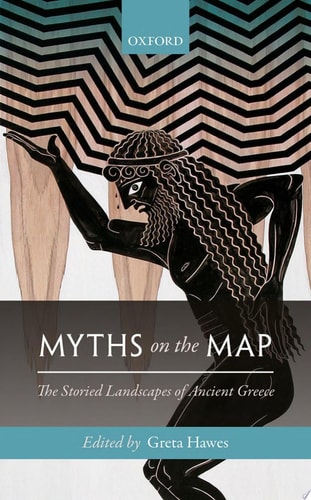
Polybius boldly declared that 'now that all places have become accessible by land or sea, it is no longer appropriate to use poets and writers of myth as witnesses of the unknown' (4.40.2). And yet, in reality, the significance of myth did not diminish as the borders of the known world expanded. Storytelling was always an inextricable part of how the ancient Greeks understood their environment; mythic maps existed alongside new, more concrete, methods of charting the contours of the earth. Specific landscape features acted as repositories of myth and spurred their retelling; myths, in turn, shaped and gave sense to natural and built environments, and were crucial to the conceptual resonances of places both unknown and known. This volume brings together contributions from leading scholars of Greek myth, literature, history, and archaeology to examine the myriad intricate ways in which ancient Greek myth interacted with the physical and conceptual landscapes of antiquity. The diverse range of approaches and topics highlights in particular the plurality and pervasiveness of such interactions. The collection as a whole sheds new light on the central importance of storytelling in Greek conceptions of space.
Menrva's Summary
THE THESIS
This volume investigates how ancient Greek myths functioned as essential tools for conceptualizing, navigating, and imbuing physical landscapes with meaning. Greta Hawes and a team of contributors from the fields of history, archaeology, and literature analyze the intersection of mythic storytelling and geographical reality. The work challenges the notion that scientific mapping replaced myth, arguing instead that both systems coexisted to define the ancient world.
THE SCOPE MAP
What You Will Find
- Analysis of landscape features as repositories for mythic narratives.
- Examination of the interplay between physical geography and conceptual space in antiquity.
- Multidisciplinary perspectives from scholars of Greek literature, history, and archaeology.
Scope Limits
- The text focuses specifically on the Greek cultural context and does not provide a global survey of myth-geography interactions.
THE AUTHORITY PERSPECTIVE
Scholars and students of classical antiquity identify this collection as a significant contribution to the study of Greek spatial perception. The text is noted for its academic rigor and its ability to synthesize diverse disciplinary approaches into a cohesive argument regarding the persistence of myth in the ancient world.
Page Count:
384
Publication Date:
2017-01-01
Publisher:
Oxford University Press
ISBN-10:
0191062200
ISBN-13:
9780191062209
History
Geography
Archaeology
Mythology
Ancient Greece
Community Tags
Similar Books