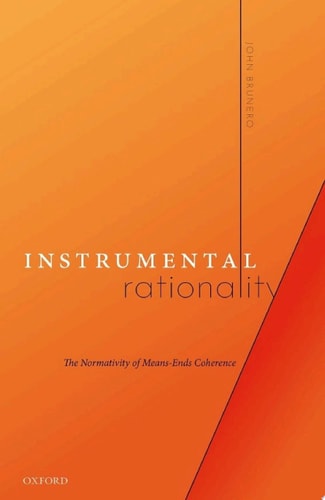
Instrumental Rationality: The Normativity of Means-Ends Coherence
0
0
As an Amazon Associate and affiliate partner, Menrva Books earns from qualifying purchases. Learn more
Author Description
Rationality requires that we intend the means that we believe are necessary for achieving our ends. Instrumental Rationality explores the formulation and status of this requirement of means-ends coherence. In particular, it is concerned with understanding what means-ends coherence requires of us as believers and agents, and why. Means-ends coherence is a genuine requirement of rationality and cannot be explained away as a myth, confused with a disjunction of requirements to have, or not have, specific attitudes. Nor is means-ends coherence strongly normative, such that we always ought to be means-ends coherent. A promising strategy for assessing why this requirement should exist is to consider the constitutive aim of intention. Just as belief has a constitutive aim (truth) that can explain some of the theoretical requirements of consistency and coherence governing beliefs, intention has a constitutive aim (here called "controlled action") that can explain some of the requirements of consistency and coherence governing intentions. We can therefore better understand means-ends coherence by understanding the constitutive aims of both of the attitudes governed by the requirement, intention, and belief.
Menrva's Summary
THE THESIS
This book investigates the nature and normative status of the requirement for means-ends coherence in human rationality. John Brunero, a philosopher specializing in practical reason, examines the relationship between our intentions and the beliefs we hold regarding the necessary steps to achieve our goals. He argues that means-ends coherence is a genuine requirement of rationality, grounded in the constitutive aims of intention and belief rather than being a mere myth or a disjunction of other requirements.
THE SCOPE MAP
What You Will Find
- A detailed analysis of the constitutive aim of intention, identified as controlled action.
- A comparison between theoretical requirements of belief and practical requirements of intention.
- Philosophical arguments against reductionist views of means-ends coherence.
Scope Limits
- The text does not provide a comprehensive theory of all rational requirements.
- It does not argue that we always have a strong normative obligation to be means-ends coherent in every instance.
THE AUTHORITY PERSPECTIVE
Experts in the field of practical reason view this work as a significant contribution to the ongoing debate regarding the normativity of instrumental rationality. Readers frequently note the academic density of the prose, which is tailored for scholars and advanced students of moral philosophy.
Page Count:
239
Publication Date:
2020-01-01
Publisher:
OUP Oxford
ISBN-10:
0191063959
ISBN-13:
9780191063954
Philosophy
Ethics
Rationality
Logic
Epistemology
Community Tags
Similar Books