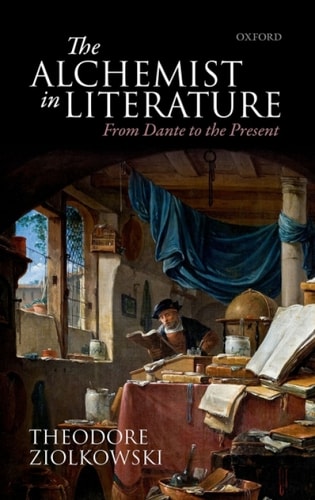
The Alchemist in Literature: From Dante to the Present
0
0
As an Amazon Associate and affiliate partner, Menrva Books earns from qualifying purchases. Learn more
Author Description
Unlike most other studies of alchemy and literature, which focus on alchemical imagery in poetry of specific periods or writers, this book traces the figure of the alchemist in Western literature from its first appearance in the Eighth Circle of Dante's Inferno down to the present. From the beginning alchemy has had two aspects: exoteric or operative (the transmutation of baser metals into gold) and esoteric or speculative (the spiritual transformation of the alchemist himself). From Dante to Ben Jonson, during the centuries when the belief in exoteric alchemy was still strong and exploited by many charlatans to deceive the gullible, writers in major works of many literatures treated alchemists with ridicule in an effort to expose their tricks. From the Renaissance to the Enlightenment, as that belief weakened, the figure of the alchemist disappeared, even though Protestant poets in England and Germany were still fond of alchemical images. But when eighteenth-century science almost wholly undermined alchemy, the figure of the alchemist began to emerge again in literature--now as a humanitarian hero or as a spirit striving for sublimation. Following these esoteric romanticizations, as scholarly interest in alchemy intensified, writers were attracted to the figure of the alchemist and his quest for power. The fin-de-siecle saw a further transformation as poets saw in the alchemist a symbol for the poet per se and others, influenced by the prevailing spiritism, as a manifestation of the religious spirit. During the interwar years, as writers sought surrogates for the widespread loss of religious faith, esoteric alchemy underwent a pronounced revival, and many writers turned to the figure of the alchemist as a spiritual model or, in the case of Paracelsus in Germany, as a national figurehead. This tendency, theorized by C. G. Jung in several major studies, inspired after World War II a vast popularization of the figure in novels--historical, set in the present, or juxta
Menrva's Summary
THE THESIS
This book investigates the evolution of the alchemist figure in Western literature, tracing its shifting symbolic and narrative roles from the medieval period to the contemporary era. Theodore Ziolkowski, a distinguished scholar of German and comparative literature, utilizes a historical and thematic framework to analyze how the perception of alchemy transitioned from a focus on material transmutation to a metaphor for spiritual and artistic development. By examining primary texts across centuries, the author demonstrates how the alchemist reflects the changing intellectual and religious anxieties of Western society.
THE SCOPE MAP
What You Will Find
- A chronological survey of the alchemist figure from Dante’s Inferno to modern literature.
- Analysis of the distinction between exoteric (operative) and esoteric (speculative) alchemy.
- Examination of the influence of C. G. Jung’s theories on the literary revival of alchemical motifs.
- Exploration of the alchemist as a symbol for the poet and the spiritual seeker.
Scope Limits
- The study focuses primarily on Western literary traditions, excluding non-Western alchemical narratives.
- The analysis does not provide a technical history of actual alchemical practices, focusing instead on the literary representation of the figure.
THE AUTHORITY PERSPECTIVE
Scholars and critics recognize this work as a comprehensive and authoritative study on the intersection of occult history and literary characterization. Readers frequently note the academic rigor and the clarity with which Ziolkowski maps the transition of the alchemist from a figure of ridicule to a symbol of spiritual aspiration.
Page Count:
256
Publication Date:
2015-01-01
Publisher:
OUP Oxford
ISBN-10:
0191063819
ISBN-13:
9780191063817
Western
English
Literary Criticism
Literature History
English & College Success
Alchemy
Community Tags
Similar Books