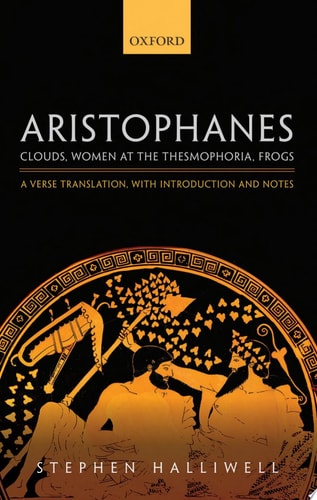
Aristophanes: Clouds, Women at the Thesmophoria, Frogs
0
0
As an Amazon Associate and affiliate partner, Menrva Books earns from qualifying purchases. Learn more
Author Description
Aristophanes Is The Only Surviving Representative Of Greek Old Comedy, An Exuberant Form Of Festival Drama Which Flourished In Athens During The Fifth Century Bc. One Of The Most Original Playwrights In The Entire Western Tradition, His Comedies Are Remarkable For Their Brilliant Combination Of Fantasy And Satire, Their Constantly Inventive Manipulation Of Language, And Their Use Of Absurd Characters And Plots To Expose His Society's Institutions And Values To The Bracing Challenge Of Laughter. This Vibrant Collection Of Verse Translations Of Aristophanes' Works Combines Historical Accuracy With A Sensitive Attempt To Capture The Rich Dramatic And Literary Qualities Of Aristophanic Comedy. The Volume Presents Clouds, With Its Famous Caricature Of The Philosopher Socrates; Women At The Thesmophoria (or Thesmophoriazusae), A Work Which Mixes Elaborate Parody Of Tragedy With A Great Deal Of Transvestite Burlesque; And Frogs, In Which The Dead Tragedians Aeschylus And Euripides Engage In A Vituperative Contest Of 'literary Criticism' Of Each Other's Plays. Featuring Expansive Introductions To Each Play And Detailed Explanatory Notes, The Volume Also Includes An Illuminating Appendix, Which Provides Information And Selected Fragments From The Lost Plays Of Aristophanes.
Menrva's Summary
THE PULSE
The central conflict involves the collision of traditional Athenian values with the radical intellectual and social shifts of the fifth century BC, expressed through biting satire and absurdity. Aristophanes utilizes these three plays to critique the philosophical, political, and literary figures of his time. In Clouds, a father seeks to escape debt by learning the sophistry of Socrates, only to find the new learning destructive. Women at the Thesmophoria centers on a gender-bending plot to protect the reputation of women against the playwright Euripides. Frogs follows the god Dionysus as he descends into the underworld to retrieve a great poet, resulting in a competitive debate between Aeschylus and Euripides. The narrative framework relies on the conventions of Old Comedy, characterized by fantastical premises, direct address to the audience, and elaborate choral interludes.
INSIDE THE PAGES
- Use of the parabasis, where the chorus addresses the audience directly on behalf of the author.
- Integration of bawdy humor and transvestite burlesque to heighten comedic effect.
- Sharp parody of contemporary tragic playwrights and their stylistic idiosyncrasies.
- Philosophical caricature, particularly the depiction of Socrates as a sophist.
- Frequent use of metatheatrical devices that break the fourth wall.
- Incorporation of verse translation to maintain the rhythmic vitality of the original Greek.
- Exploration of political and social institutions through the lens of the absurd.
- Inclusion of scholarly introductions and explanatory notes for historical context.
THE COLLECTIVE ECHO
Readers and critics frequently highlight the enduring relevance of Aristophanes' wit and his ability to weaponize laughter against the societal norms of ancient Athens. Discussion often centers on the balance between the playwright's crude, slapstick humor and his sophisticated, intellectual critiques of contemporary figures like Socrates and Euripides. Scholars appreciate the translation's commitment to capturing the rhythmic and linguistic inventiveness of the original verse. The volume is widely regarded as a useful entry point for those interested in the mechanics of Old Comedy and the cultural climate of the fifth century BC.
Page Count:
368
Publication Date:
2015-01-01
Publisher:
Oxford University Press
ISBN-10:
0191066230
ISBN-13:
9780191066238
Drama
Satire
Classical
Plays
Greek Comedy
Ancient History