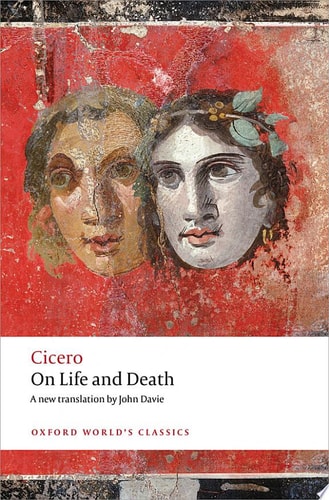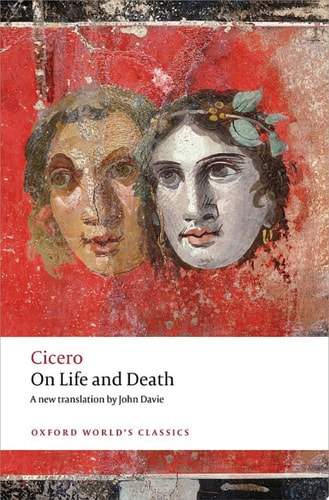
On Life and Death
0
0
As an Amazon Associate and affiliate partner, Menrva Books earns from qualifying purchases. Learn more
Author Description
'any service I may have rendered my countrymen in my active life I may also extend to them... now that I am at leisure' Marcus Tullius Cicero (106-43 BC), Rome's greatest orator, had a career of intense activity in politics, the law courts and the administration, mostly in Rome. His fortunes, however, followed those of Rome, and he found himself driven into exile in 58 BC, only to return a year later to a city paralyzed by the domination of Pompey, Crassus, and Caesar. Cicero, though a senior statesman, struggled to maintain his independence and it was during these years that, frustrated in public life, he first started to put his excess energy, stylistic brilliance, and superabundant vocabulary into writing these works of philosophy. The three dialogues collected here are the most accessible of Cicero's works, written to his friends Atticus and Brutus, with the intent of popularizing philosophy in Ancient Rome. They deal with the everyday problems of life; ethics in business, the experience of grief, and the difficulties of old age.
Menrva's Summary
THE THESIS
This collection investigates the application of Hellenistic philosophical principles to the practical challenges of Roman public and private life. Cicero, a prominent Roman statesman and orator, leverages his rhetorical expertise to translate complex Greek philosophical concepts into accessible Latin prose. His primary argument posits that philosophy serves as a necessary guide for navigating the inevitable hardships of human existence, including grief, aging, and ethical dilemmas in professional conduct.
THE SCOPE MAP
What You Will Find
- Three distinct philosophical dialogues addressed to Atticus and Brutus.
- Explorations of Stoic and Academic skepticism regarding ethics and mortality.
- Rhetorical frameworks designed to popularize philosophical inquiry among the Roman elite.
Scope Limits
- The text does not provide a comprehensive history of Roman political events.
- It does not offer an exhaustive technical analysis of Greek philosophical schools.
THE AUTHORITY PERSPECTIVE
Scholars and classicists frequently identify this volume as a foundational text for understanding the intersection of Roman political culture and Hellenistic thought. Readers often note the clarity of Cicero's prose, which remains accessible despite the historical distance of the subject matter.
Page Count:
266
Publication Date:
2017-01-01
Publisher:
OUP Oxford
ISBN-10:
0191662283
ISBN-13:
9780191662287
Non-Fiction
Philosophy
Classical
Ancient History
Ethics
History & Surveys