Cyclops
0
0
As an Amazon Associate and affiliate partner, Menrva Books earns from qualifying purchases. Learn more
Author Description
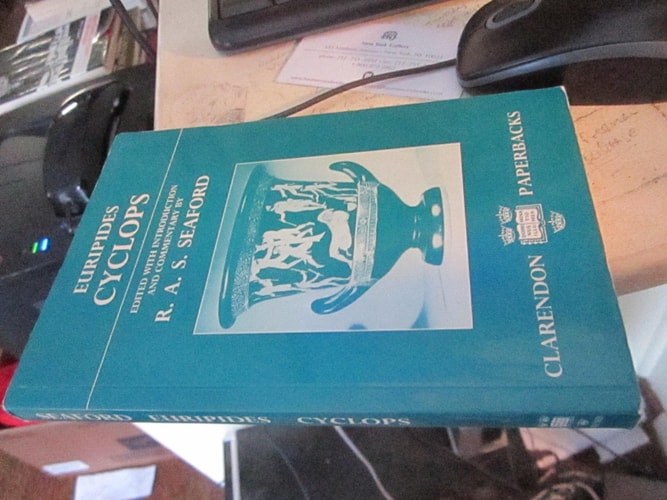
This invaluable edition of Euripedes' Cyclops, the only complete example of satyric drama to survive, provides a full historical and analytic account of the genre, reconstructing its origins, development, and decline; examines the place of satyrs in the Greek religious imagination; and explores the significance of Euripides' divergence from the Homeric model. The commentary surrounding Diggle's standard text focuses on problems of text, language, and interpretation.
Menrva's Summary
THE PULSE
Odysseus and his crew find themselves trapped in the cave of the man-eating Cyclops Polyphemus, forcing them to rely on cunning to survive. The protagonist, Odysseus, seeks to escape the island and return home, but he is physically constrained by the giant's strength and the logical impossibility of overcoming a monster through brute force alone. The narrative follows the classical structure of a satyr play, utilizing a chorus of satyrs to provide commentary and comic relief. The conflict centers on the tension between the civilized Greek hero and the uncivilized, monstrous nature of the Cyclops, framed through the lens of ancient Greek theatrical conventions.
INSIDE THE PAGES
- Features the only complete surviving example of a Greek satyr play.
- Incorporates a chorus of satyrs led by Silenus to provide rhythmic and thematic commentary.
- Explores the juxtaposition of Homeric epic heroism with the bawdy, comedic elements of satyric drama.
- Utilizes a confined, singular setting within the cave of Polyphemus to heighten the sense of entrapment.
- Employs dialogue that balances tragic gravity with grotesque humor.
- Examines the religious and cultural significance of satyrs in the Greek imagination.
- Highlights the divergence from traditional Homeric characterizations of Odysseus.
- Includes scholarly commentary on textual variants and linguistic nuances of the original Greek.
THE COLLECTIVE ECHO
Readers and scholars frequently analyze this work as a vital bridge between the high seriousness of tragedy and the irreverent nature of comedy. Discussion often centers on how Euripides subverts the expectations of the Homeric myth to create a distinctively satyric atmosphere. Critics highlight the play's unique role in understanding the evolution of Greek theatrical forms and the specific function of the chorus. The balance between the visceral threat of the Cyclops and the absurdity of the satyrs remains a primary focus for those studying the mechanics of ancient performance. This edition is widely regarded as a necessary resource for those interested in the technical and historical context of the text.
Page Count:
240
Publication Date:
1988-09-08
Publisher:
Oxford University Press
ISBN-10:
0198140657
ISBN-13:
9780198140658
Drama
Satire
Dramatic works
Plays
Classical
Greek Mythology