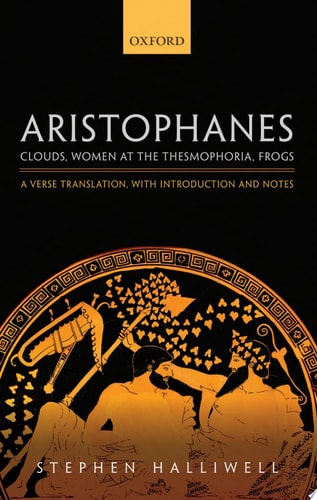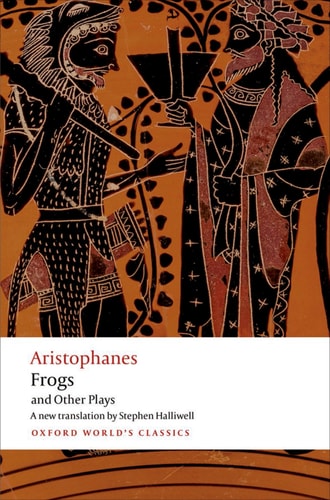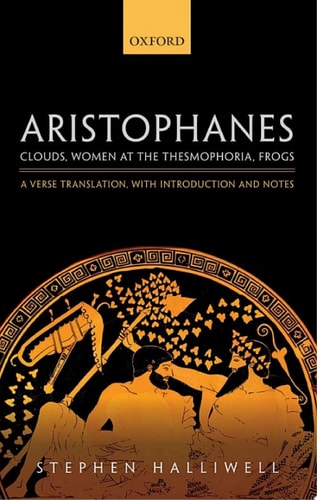
Aristophanes: Clouds, Women at the Thesmophoria, Frogs: A Verse Translation, with Introduction and Notes
0
0
As an Amazon Associate and affiliate partner, Menrva Books earns from qualifying purchases. Learn more
Author Description
Aristophanes is the only surviving representative of Greek Old Comedy, an exuberant form of festival drama which flourished in Athens during the fifth century BC. One of the most original playwrights in the entire Western tradition, his comedies are remarkable for their brilliant combination of fantasy and satire, their constantly inventive manipulation of language, and their use of absurd characters and plots to expose his society's institutions and values to the bracing challenge of laughter. This vibrant collection of verse translations of Aristophanes' works combines historical accuracy with a sensitive attempt to capture the rich dramatic and literary qualities of Aristophanic comedy. The volume presents Clouds, with its famous caricature of the philosopher Socrates; Women at the Thesmophoria (or Thesmophoriazusae), a work which mixes elaborate parody of tragedy with a great deal of transvestite burlesque; and Frogs, in which the dead tragedians Aeschylus and Euripides engage in a vituperative contest of 'literary criticism' of each other's plays. Featuring expansive introductions to each play and detailed explanatory notes, the volume also includes an illuminating appendix, which provides information and selected fragments from the lost plays of Aristophanes.
Menrva's Summary
THE PULSE
The central conflict involves the collision of traditional Athenian values with the radical, often absurd, intellectual and social shifts of the fifth century BC. Aristophanes utilizes these three plays to critique contemporary figures and institutions through the lens of Old Comedy. In Clouds, a father attempts to escape debt by enrolling his son in the school of Socrates, only to find the philosopher's teachings morally corrosive. Women at the Thesmophoria depicts a gender-bending conspiracy where women plot revenge against Euripides, while Frogs features the god Dionysus descending into the underworld to retrieve a poet, resulting in a competitive debate between Aeschylus and Euripides. The narrative framework relies on the conventions of Greek festival drama, characterized by choral interludes, direct address to the audience, and high-energy farce.
INSIDE THE PAGES
- Use of the parabasis, where the chorus addresses the audience directly on behalf of the playwright.
- Integration of musical and rhythmic verse structures typical of Old Comedy.
- Satirical characterization of historical figures such as Socrates and Euripides.
- Extensive use of parody, specifically targeting the stylistic tropes of contemporary tragic poets.
- Incorporation of slapstick, burlesque, and transvestite humor to drive comedic tension.
- Exploration of political and social anxieties regarding the decline of traditional Athenian morality.
- Meta-theatrical commentary on the nature of poetry and the role of the artist in society.
- Detailed explanatory notes providing historical context for obscure cultural references.
THE COLLECTIVE ECHO
Readers and scholars frequently highlight the difficulty of translating the linguistic inventiveness and topical humor of Aristophanes into modern English. Discussion often centers on the effectiveness of Halliwell's verse translations in maintaining the rhythmic vitality of the original Greek while ensuring accessibility for contemporary audiences. Critics emphasize the balance between the plays' bawdy, physical humor and their underlying intellectual critique of Athenian democracy and philosophy. The volume is widely regarded as a useful resource for students and enthusiasts interested in the mechanics of ancient comedy and the specific cultural context of the fifth century BC.
Page Count:
394
Publication Date:
2015-01-01
Publisher:
OUP Oxford
ISBN-10:
0191066249
ISBN-13:
9780191066245
Drama
Satire
Classical
English
Cultural Anthropology
Comedy
Plays
English & College Success