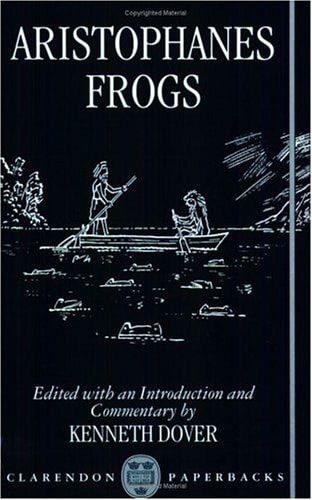
Frogs
0
0
As an Amazon Associate and affiliate partner, Menrva Books earns from qualifying purchases. Learn more
Author Description
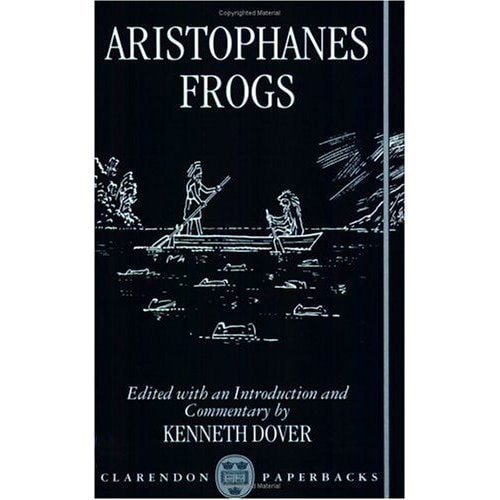
Among extant Greek comedies, the Frogs is unique for the light it throws on Classical Greek attitudes toward tragedy and literature in general. It merits a much more extensive commentary than it has so far received, and the establishment of the text itself has rested for over a century on collations which were inadequate and inaccurate. At the same time, its most problematic passages have been the subject, in recent years, of more scholarly articles than those of any other Greek play. In this introduction, edition, and commentary, Sir Kenneth Dover presents the relevant data, arguments, and considerations as fully as can reasonably be done in one volume.
Menrva's Summary
THE PULSE
The god Dionysus descends into the underworld to bring the playwright Euripides back to life, sparking a chaotic contest of wits between the great tragedians. Disguised as Heracles, Dionysus navigates the perils of Hades to resolve the cultural crisis in Athens caused by the death of its finest poets. He encounters various mythological obstacles and comedic figures, ultimately serving as the judge in a verbal duel between Aeschylus and Euripides. The narrative utilizes the conventions of Old Comedy, blending slapstick humor with sharp literary criticism. The play operates within a framework of high-stakes satire, where the survival of the city is linked to the quality of its art.
INSIDE THE PAGES
- Use of the chorus to provide commentary and rhythmic interludes
- Satirical characterization of gods and historical figures
- Verbal sparring matches between competing poets
- Incorporation of parody and pastiche of tragic styles
- Frequent use of situational irony and physical comedy
- Exploration of the social and political function of theater
- Metatheatrical awareness and references to the craft of writing
- Episodic structure typical of Aristophanic comedy
THE COLLECTIVE ECHO
Readers and scholars frequently highlight the play as a primary source for understanding the aesthetic values of the Classical period. Discussion often centers on the specific literary critiques Aristophanes levels against Euripides and Aeschylus, which reveal much about the evolving tastes of the Athenian audience. Critics often note the balance between the play's absurd, farcical elements and its serious engagement with the role of the poet in society. The work is widely studied for its unique position as both a piece of performance art and a foundational text of literary criticism. Many readers find the interplay between the divine protagonist and the mortal poets to be a clever device for exploring the nature of artistic legacy.
Page Count:
416
Publication Date:
1994-12-29
Publisher:
Clarendon Press
ISBN-10:
0198150059
ISBN-13:
9780198150053
Drama
Satire
Greek
Dramatic works
Comedy
Classical
Community Tags
Other Editions(20)

Independently Published
2019
Default edition
Independently Published
2019
CreateSpace Independent Publishing Platform
2017
Creative Media Partners, LLC
2015
Creative Media Partners, LLC
2015
Hackett Publishing
2015

Floating Press, The
2014
Hackett Publishing
2013
Digireads.com Publishing
2013
CreateSpace Independent Publishing Platform
2012
CreateSpace Independent Publishing Platform
2011
General Books LLC
2010
General Books LLC
2010
RicherResourcesPublications
2008

Kessinger Publishing, LLC
2004

Textbook Publishers
2003
Clarendon Press
1994
Oxford University Press
1993
Bristol Classical Press
1983

Oxford University Press
1978
Similar Books


Reader Comments
Share Your Thoughts
No comments yet. Be the first to share your thoughts!