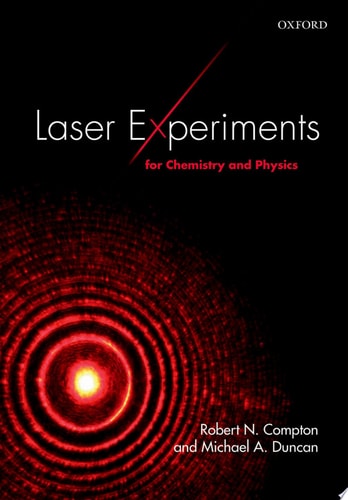
Laser Experiments for Chemistry and Physics
0
0
As an Amazon Associate and affiliate partner, Menrva Books earns from qualifying purchases. Learn more
Author Description
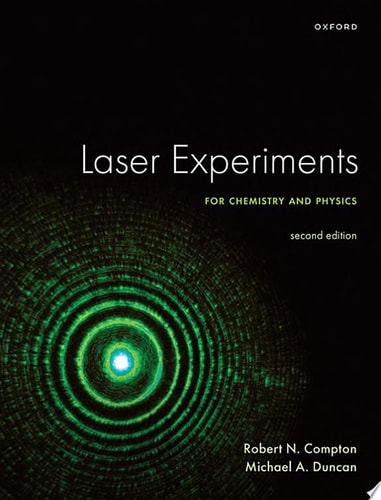
Lasers are employed throughout science and technology, in fundamental research, the remote sensing of atmospheric gases or pollutants, communications, medical diagnostics and therapies, and the manufacturing of microelectronic devices. Understanding the principles of their operation, which underlie all of these areas, is essential for a modern scientific education. This text introduces the characteristics and operation of lasers through laboratory experiments designed for the undergraduate curricula in Chemistry and Physics. Introductory chapters describe the properties of light, the history of laser invention, the atomic, molecular and optical principles behind how lasers work, and the kinds of lasers available today. Other chapters include the basic theory of spectroscopy and computational chemistry used to interpret laser experiments. Experiments range from simple in-class demonstrations to more elaborate configurations for advanced students. Each chapter has historical and theoretical background, as well as options suggested for variations on the prescribed experiments. The text will be useful for undergraduates students in advanced lab classes, for instructors designing these classes, or for graduate students beginning a career in laser science.
Menrva's Summary
THE THESIS
This text investigates the fundamental principles of laser operation and their practical application through a structured laboratory curriculum for undergraduate students. Professors Michael A. Duncan and Robert N. Compton utilize their academic expertise to bridge the gap between theoretical optical physics and hands-on experimental practice. The book provides a comprehensive framework that combines historical context, atomic and molecular theory, and computational methods to prepare students for professional research in laser science.
THE SCOPE MAP
What You Will Find
- Theoretical foundations of light properties and laser invention
- Practical laboratory experiments ranging from basic demonstrations to advanced configurations
- Integration of spectroscopy and computational chemistry for data interpretation
- Guidance for instructors on curriculum design and experimental variations
Scope Limits
- Does not cover industrial-scale laser manufacturing processes
- Does not provide an exhaustive encyclopedia of all existing laser types
THE AUTHORITY PERSPECTIVE
Experts identify this text as a highly structured resource for advanced undergraduate laboratory courses in physical sciences. Readers frequently note the balance between rigorous theoretical background and actionable experimental protocols.
Page Count:
432
Publication Date:
2015-01-01
Publisher:
OUP Oxford
ISBN-10:
0191060682
ISBN-13:
9780191060687
Science
Lasers
Physics
Earth Sciences
Optics
Education
Chemistry
Laboratory Manual
Spectroscopy