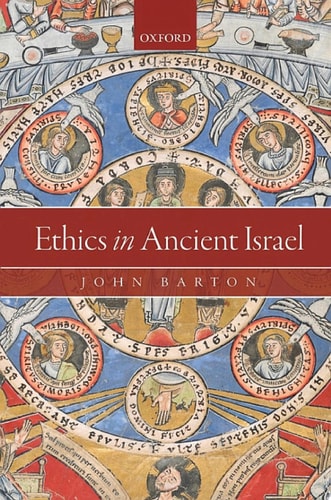
Ethics in Ancient Israel
0
0
As an Amazon Associate and affiliate partner, Menrva Books earns from qualifying purchases. Learn more
Author Description
Ethics in Ancient Israel is a study of ethical thinking in ancient Israel from around the eighth to the second century BC. The evidence for this consists primarily of the Old Testament/ Hebrew Bible and Apocrypha, but also other ancient Jewish writings such as the Dead Sea Scrolls and various anonymous and pseudonymous texts from shortly before the New Testament period. Professor John Barton argues that there were several models for thinking about ethics, including a 'divine command' theory, something approximating to natural law, a virtue ethic, and a belief in human custom and convention. Moreover, he examines ideas of reward and punishment, purity and impurity, the status of moral agents and patients, imitation of God, and the image of God in humanity. Barton maintains that ethical thinking can be found not only in laws but also in the wisdom literature, in the Psalms, and in narrative texts. There is much interaction with recent scholarship in both English and German. The book features discussion of comparative material from other ancient Near Eastern cultures and a chapter on short summaries of moral teaching, such as the Ten Commandments. This innovative work should be of interest to those concerned with the interpretation of the Old Testament but also to students of ethics.
Menrva's Summary
THE THESIS
This work investigates the diverse frameworks and underlying logic of ethical thought within ancient Israelite society from the eighth to the second century BC. Professor John J. Barton utilizes a broad range of primary sources, including the Hebrew Bible, the Apocrypha, and the Dead Sea Scrolls, to challenge the notion of a monolithic moral code. He argues that ancient Israelite ethics were multifaceted, incorporating divine command, natural law, virtue ethics, and social custom to navigate moral life.
THE SCOPE MAP
What You Will Find
- Analysis of ethical models including divine command, natural law, and virtue ethics
- Examination of moral concepts such as reward, punishment, purity, and the image of God
- Comparative study of ancient Near Eastern cultural materials
- Investigation of moral teaching across various genres including law, wisdom literature, and narrative
Scope Limits
- Focus is restricted to the period between the eighth and second centuries BC
- Excludes extensive analysis of post-biblical rabbinic developments
THE AUTHORITY PERSPECTIVE
Scholars frequently cite this text as a foundational resource for understanding the complexity of biblical moral thought. Readers often note the academic density of the prose, which balances rigorous textual analysis with broader philosophical inquiry.
Page Count:
329
Publication Date:
2014-01-01
Publisher:
OUP Oxford
ISBN-10:
019106095X
ISBN-13:
9780191060953
Religion
Philosophy
Ethics
The Bible
Theology
Ancient History
Bibles
Community Tags
Similar Books