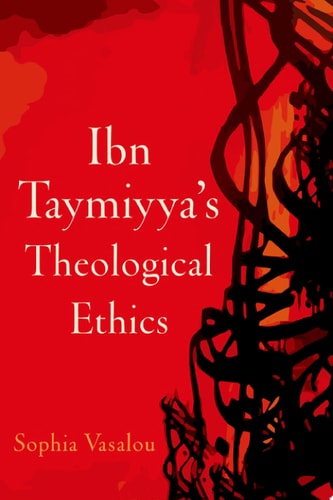
Ibn Taymiyya's Theological Ethics
0
0
As an Amazon Associate and affiliate partner, Menrva Books earns from qualifying purchases. Learn more
Author Description
Icon of modern-day fundamentalist movements, firebrand religious purist, tireless polemicist against the intellectual schools of his time-the Ibn Taymiyya we know is a thinker we often associate with hard attitudes and dogmatic stances. Yet there is another Ibn Taymiyya that stands out from the pages of his work, the thinker who fashions himself as a master of the via media and as a defender of the harmony between human reason and the religious faith. The aim of this book is to shed fresh light on Ibn Taymiyya's intellectual identity by a close investigation of his ethical thought. Earlier Muslim thinkers debating ethical value had been exercised by a number of core questions. What makes actions right or wrong? How do human beings know it? And what is God's relationship to the evaluative standards discerned by the human mind? An investigation of Ibn Taymiyya's engagement with such questions has much to teach us about his intellectual program and particularly about the role of reason and the linchpin concept of human nature (fitra) within this program. It also has much to teach us about Ibn Taymiyya's relationship to the intellectual landscape of his time, bringing us up against a rich tapestry of ethical discussions unfolding within theology, philosophy and legal theory in the classical period. At the same time, a close reading of Ibn Taymiyya's ethics invites us to confront not only the content of his thought but its form, and more particularly those features of his writing that fracture our efforts to unify his thought.
Menrva's Summary
THE THESIS
This book investigates the ethical framework of Ibn Taymiyya to reconcile his reputation as a rigid polemicist with his self-conception as a proponent of the via media and the harmony between reason and faith. Sophia Vasalou, a scholar of Islamic philosophy and theology, utilizes a close reading of primary texts to analyze how Ibn Taymiyya navigated classical debates regarding the nature of moral value, the role of human reason, and the concept of fitra. The work argues that a nuanced understanding of his ethical thought is necessary to grasp his broader intellectual program and his position within the complex theological and legal landscape of the classical period.
THE SCOPE MAP
What You Will Find
- Analysis of classical Muslim debates on the origins of right and wrong
- Examination of the concept of fitra (human nature) as a linchpin for moral discernment
- Comparative study of Ibn Taymiyya's positions against contemporary theological, philosophical, and legal schools
- Investigation into the stylistic and formal inconsistencies within Ibn Taymiyya's writing
Scope Limits
- The study does not provide a comprehensive biography of Ibn Taymiyya's life
- It does not focus on his political or social activism, centering instead on his ethical theory
THE AUTHORITY PERSPECTIVE
Scholars and students of Islamic intellectual history frequently note the academic rigor and depth of Vasalou's analysis. Experts highlight this text as a significant contribution to the study of Ibn Taymiyya, particularly for its ability to move beyond common stereotypes of his thought.
Page Count:
354
Publication Date:
2015-01-01
Publisher:
Oxford University Press
ISBN-10:
0190493895
ISBN-13:
9780190493899
Philosophy
Religion
Theology
Classical Islamic Thought
Muslims
History of Ideas
Islamic Ethics
Scholars
Islamic Studies
Ethics
Community Tags
Similar Books