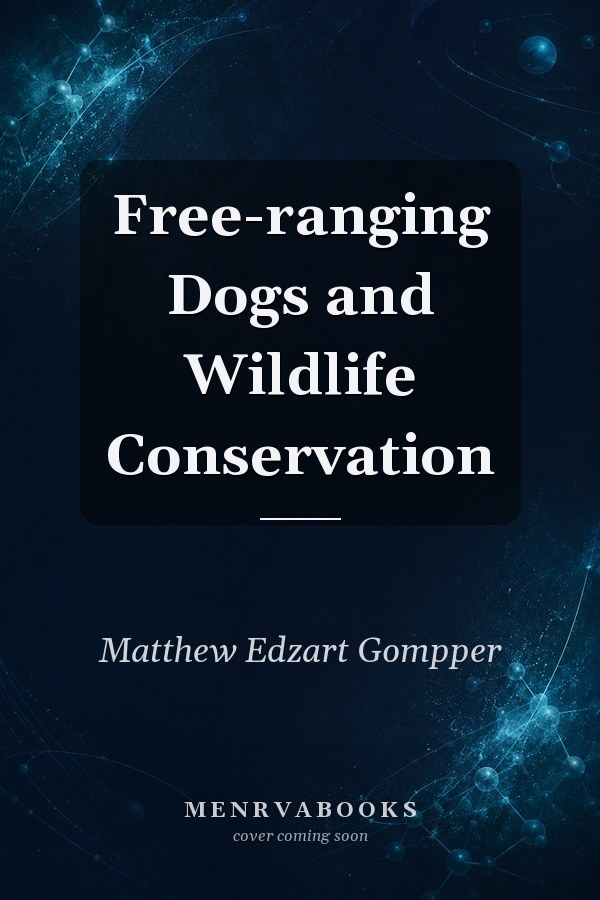
Free-ranging Dogs and Wildlife Conservation
0
0
As an Amazon Associate and affiliate partner, Menrva Books earns from qualifying purchases. Learn more
Author Description
Dogs are the world's most common and widespread carnivores and are nearly ubiquitous across the globe. The vast majority of these dogs, whether owned, pure-bred or stray, spend a large portion of their life as unconfined, free-roaming animals, persisting at the interface of human and wildlife communities. Their numbers are particularly large throughout the developing world. This book provides a review of the effects of dogs on native wildlife species.
Menrva's Summary
THE THESIS
This book investigates the ecological impact of free-ranging domestic dogs on native wildlife populations across diverse global environments. Matthew E. Gompper, a specialist in carnivore ecology, synthesizes existing research to evaluate how the ubiquity of unconfined dogs influences biodiversity, disease transmission, and predator-prey dynamics. The text provides a framework for understanding the complex interactions between human-associated carnivores and wild ecosystems.
THE SCOPE MAP
What You Will Find
- Analysis of dog-wildlife interactions including predation, competition, and disease transmission
- Global case studies ranging from developed to developing nations
- Evaluation of management strategies for free-roaming dog populations
Scope Limits
- Does not focus on the behavioral psychology of individual domestic dogs
- Does not provide a comprehensive guide for pet ownership or domestic training
THE AUTHORITY PERSPECTIVE
Experts recognize this work as a foundational text for understanding the often-overlooked ecological role of domestic dogs in wild spaces. Readers frequently note the academic rigor and the breadth of the research presented in the volume.
Page Count:
312
Publication Date:
1900-01-01
ISBN-10:
0191810185
ISBN-13:
9780191810183
Science
Conservation Biology
Ecology
Zoology
Community Tags
Similar Books