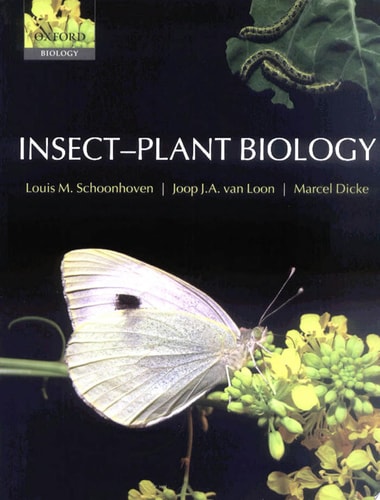
Insect-Plant Biology
0
0
As an Amazon Associate and affiliate partner, Menrva Books earns from qualifying purchases. Learn more
Author Description
Half of all insect species are dependent on living plant tissues, consuming about 10% of plant annual production in natural habitats and an even greater percentage in agricultural systems, despite sophisticated control measures. Plants possess defences that are effective against almost all herbivorous insect species. Host-plant specialization, observed in over 80% of these animals, appears to be an effective adaptation to breach these defence systems. The mechanisms underlying plant defence to invading herbivores on the one side, and insect adaptations to utilize plants for nutrition, defence and shelter on the other, are the main subjects of this book. In the case of plants exposed to insect herbivores, they include the activation of defence systems in order to minimize damage, as well as the emission of chemical signals that may attract natural enemies of the invading herbivores and may be exploited by neighbouring plants that mount defences as well. For insects, they include complex bevioural adaptations and their underlying sensory systems (with their implications for learning and nutritional plasticity), as well as the endocrinological aspects of life cycle synchronization with host-plant phenology. Insect-Plant Biology discusses the operation of these mechanisms at the molecular and organismal levels and explicitly puts these in the context of both ecological interactions and evolutionary processes. In doing so, it uncovers the highly intricate antagonistic as well as mutualistic interactions that have evolved between plants and insects. The book concludes with a chapter on the application of our knowledge of insect-plant interactions to agricultural production. This multidisciplinary approach will appeal to students in biology, agricultural entomology, ecology, and indeed anyone interested in the principles underlying the relationships between the two largest groups of organisms on earth: plants and insects.
Menrva's Summary
THE THESIS
This book investigates the complex co-evolutionary mechanisms and ecological interactions that define the relationship between herbivorous insects and their host plants. The authors, prominent researchers in entomology and plant biology, synthesize decades of research to explain how plants deploy chemical defenses and how insects counter these defenses through behavioral, sensory, and physiological adaptations. The text provides a comprehensive framework for understanding these interactions from the molecular level up to broader ecological and evolutionary contexts.
THE SCOPE MAP
What You Will Find
- Molecular and organismal mechanisms of plant defense systems
- Behavioral adaptations and sensory systems in herbivorous insects
- Chemical signaling and tritrophic interactions involving natural enemies
- Endocrinological synchronization of insect life cycles with plant phenology
- Applications of insect-plant interaction knowledge in agricultural systems
Scope Limits
- Does not cover non-herbivorous insect-plant interactions such as pollination in detail
- Does not provide a comprehensive field guide for identifying specific insect species
THE AUTHORITY PERSPECTIVE
Experts recognize this text as a foundational resource for students and researchers in entomology and ecology due to its rigorous multidisciplinary approach. Readers frequently note the academic density of the prose, which effectively bridges the gap between molecular biology and field-based ecological studies.
Page Count:
440
Publication Date:
2006-01-01
Publisher:
Oxford University Press
ISBN-10:
0191545821
ISBN-13:
9780191545825
Science
Botany
Ecology
Biology
Entomology
Community Tags
Other Editions(2)
Similar Books


Reader Comments
Share Your Thoughts
No comments yet. Be the first to share your thoughts!