The Market Makers
0
0
As an Amazon Associate and affiliate partner, Menrva Books earns from qualifying purchases. Learn more
Author Description
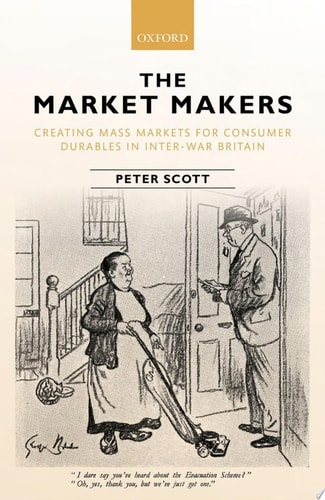
During The Twentieth Century 'affluence' (both At The Level Of The Individual Household And That Of Society As A Whole) Became Intimately Linked With Access To A Range Of Prestige Consumer Durables. The Market Makers Charts The Inter-war Origins Of A Process That Would Eventually Transform These Features Of Modern Life From Being 'luxuries' To 'necessities' For Most British Families. Peter Scott Examines How Producers And Retailers Succeeded In Creating 'mass' (though Not Universal) Market For New Suites Of Furniture, Radios, Modern Housing, And Some Electrical And Gas Appliances, While Also Exploring Why Some Other Goods, Such As Refrigerators, Telephones, And Automobiles, Failed To Reach The Mass Market In Britain Before The 1950s. Creating Mass Markets Presented A Formidable Challenge For Manufacturers And Retailers. Consumer Durables Required Large Markets. Most Involved Significant Research And Development Costs. Some, Such As The Telephone, Radio, And Car, Were Dependent On Complementary Investments In Infrastructure. All Required Intensive Marketing - Usually Including Expensive Advertising In National Newspapers And Magazines, While Some Also Needed Mass Production Methods (and Output Volumes) To Make Them Affordable To A Mass Market. This Study Charts The Pioneering Efforts Of Entrepreneurs (many Of Whom, Though Once Household Names, Are Now Largely Forgotten) To Provide Consumer Durables At A Price Affordable To A Mass Market And To Persuade A Sometimes Reluctant Public To Embrace The New Products And The Consumer Credit That Their Purchase Required. In Doing So, Scott Shows That, Contrary To Much Received Wisdom, There Was A 'consumer Durables Revolution' In Inter-war Britain - At Least For Certain Highly Prioritised Goods.
Menrva's Summary
THE THESIS
This book investigates the origins of the consumer durables revolution in inter-war Britain and the mechanisms by which luxury goods transitioned into household necessities. Peter Scott, an economic historian, utilizes archival data and business records to analyze the strategies employed by manufacturers and retailers to cultivate mass markets for new products. He argues that despite conventional historical narratives, a significant shift in consumer behavior and industrial output occurred during this period for specific prioritized goods.
THE SCOPE MAP
What You Will Find
- Analysis of the inter-war British market for furniture, radios, housing, and appliances.
- Examination of the role of consumer credit and advertising in market expansion.
- Case studies of entrepreneurial efforts to scale production and infrastructure.
Scope Limits
- The study focuses primarily on Britain and does not provide a comparative global analysis.
- It excludes detailed coverage of goods that failed to reach mass market status after the 1950s.
THE AUTHORITY PERSPECTIVE
Scholars in the field of economic history recognize this work as a detailed examination of the structural changes in British retail and manufacturing. Readers frequently note the academic density of the prose and the author's meticulous use of primary source evidence to challenge established historical assumptions.
Page Count:
448
Publication Date:
2017-01-01
Publisher:
Oxford University Press
ISBN-10:
0191086347
ISBN-13:
9780191086342
History
Economics
British History
Social History
Consumer Studies
Business History
Community Tags
Similar Books