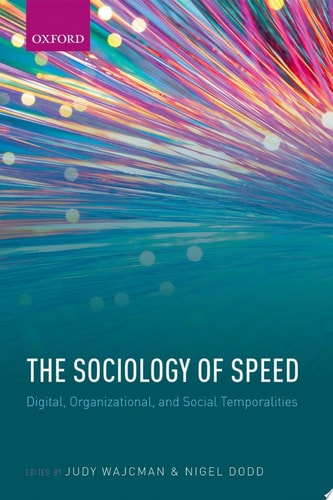
The Sociology of Speed
0
0
As an Amazon Associate and affiliate partner, Menrva Books earns from qualifying purchases. Learn more
Author Description
There Is A Widespread Perception That Life Is Faster Than It Used To Be. We Hear Constant Laments That We Live Too Fast, That Time Is Scarce, And That The Pace Of Everyday Life Is Spiraling Out Of Our Control. The Iconic Image That Abounds Is That Of The Frenetic, Technologically Tethered, Iphone/ipad-addicted Citizen. Yet Weren't Modern Machines Supposed To Save, And Thereby Free Up, Time? The Purpose Of This Book Is To Bring A Much-needed Sociological Perspective To Bear On Speed: It Examines How Speed And Acceleration Came To Signify The Zeitgeist, And Explores The Political Implications Of This. Among The Major Questions Addressed Are: When Did Acceleration Become The Primary Rationale For Technological Innovation And The Key Measure Of Social Progress? Is Acceleration Occurring Across All Sectors Of Society And All Aspects Of Life, Or Are Some Groups Able To Mobilise Speed As A Resource While Others Are Marginalised And Excluded? Does The Growing Centrality Of Technological Mediations (of Both Information And Communication) Produce Slower As Well As Faster Times, Waiting As Well As 'busyness', Stasis As Well As Mobility? To What Extent Is The Contemporary Imperative Of Speed As Much A Cultural Artefact As A Material One? To Make Sense Of Everyday Life In The Twenty-first Century, We Must Begin By Interrogating The Social Dynamics Of Speed. This Book Shows How Time Is A Collective Accomplishment, And That Temporality Is Experienced Very Differently By Diverse Groups Of People, Especially Between The Affluent And Those Who Service Them.
Menrva's Summary
THE THESIS
This book investigates the sociological origins and political implications of the modern perception that life is accelerating beyond human control. Authors Judy Wajcman and Nigel Dodd utilize a sociological framework to challenge the assumption that technological advancement inherently saves time. They argue that speed is not a neutral phenomenon but a cultural and material construct that functions as a mechanism of social stratification and power.
THE SCOPE MAP
What You Will Find
- Analysis of the historical shift where acceleration became the primary metric for social progress.
- Examination of the disparity between those who command speed as a resource and those marginalized by it.
- Investigation into the paradoxical relationship between technological connectivity and the experience of waiting or stasis.
Scope Limits
- The text does not provide practical self-help advice for individual time management.
- It does not focus on the technical engineering specifications of the communication devices mentioned.
THE AUTHORITY PERSPECTIVE
Scholars and sociologists recognize this work as a critical intervention in the study of temporality and digital culture. Readers frequently note the academic density of the prose, which serves as a foundational text for understanding the social dynamics of modern busyness.
Page Count:
224
Publication Date:
2016-01-01
Publisher:
Oxford University Press
ISBN-10:
0191085669
ISBN-13:
9780191085666
Philosophy
Technology
Sociology
Social Science
Community Tags
Similar Books