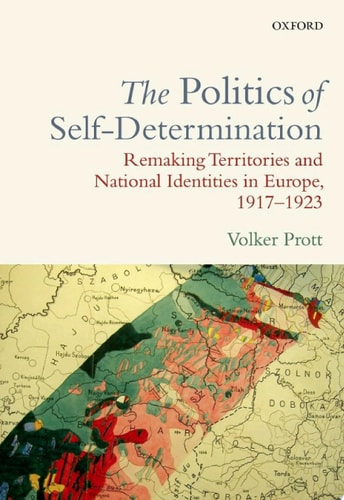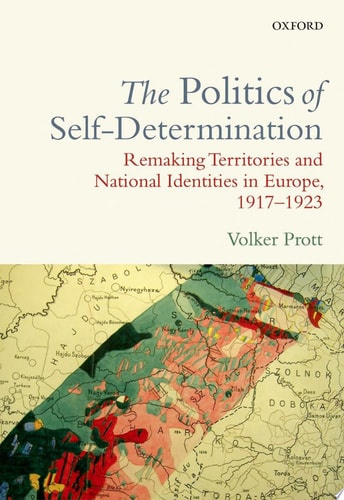
The Politics of Self-determination
0
0
As an Amazon Associate and affiliate partner, Menrva Books earns from qualifying purchases. Learn more
Author Description
The Politics Of Self-determination Examines The Territorial Restructuring Of Europe Between 1917 And 1923, When A Radically New And Highly Fragile Peace Order Was Established. It Opens With An Exploration Of The Peace Planning Efforts Of Great Britain, France, And The United States In The Final Phase Of The First World War. It Then Provides An In-depth View On The Practice Of Allied Border Drawing At The Paris Peace Conference Of 1919, Focussing On A New Factor In Foreign Policymaking-academic Experts Employed By The Three Allied States To Aid In Peace Planning And Border Drawing. This Examination Of The International Level Is Juxtaposed With Two Case Studies Of Disputed Regions Where The Newly Drawn Borders Caused Ethnic Violence, Albeit With Different Results: The Return Of Alsace-lorraine To France In 1918-19, And The Greek-turkish War Between 1919 And 1922. A Final Chapter Investigates The Approach Of The League Of Nations To Territorial Revisionism And Minority Rights, Thereby Assessing The Chances And Dangers Of The Paris Peace Order Over The Course Of The 1920s And 1930s. Volker Prott Argues That At Both The International And The Local Levels, The 'temptation Of Violence' Drove Key Actors To Simplify The Acclaimed Principle Of National Self-determination And Use Ethnic Definitions Of National Identity. While The Allies Thus Hoped To Avoid Uncomfortable Decisions And Painstaking Efforts To Establish An Elusive Popular Will, Local Elites, Administrations, And Paramilitary Leaders Soon Used Ethnic Notions Of Identity To Mobilise Popular Support Under The Guise Of International Legitimacy. Henceforth, National Self-determination Ceased To Be A Tool Of Peace-making And Instead Became An Ideology Of Violent Resistance.
Menrva's Summary
THE THESIS
This work investigates how the principle of national self-determination was transformed from a tool for peace-making into an ideology of violent resistance during the post-World War I era. Volker Prott, a historian specializing in modern European history, utilizes archival research and diplomatic records to analyze the intersection of international policy and local ethnic conflict. He argues that the reliance on simplified ethnic definitions of national identity by both Allied planners and local actors undermined the stability of the Paris Peace Order.
THE SCOPE MAP
What You Will Find
- Analysis of peace planning by Great Britain, France, and the United States between 1917 and 1923.
- Examination of the role of academic experts in Allied border-drawing at the 1919 Paris Peace Conference.
- Case studies on the transition of Alsace-Lorraine and the Greek-Turkish War.
- Assessment of the League of Nations' approach to territorial revisionism and minority rights.
Scope Limits
- The study does not provide a comprehensive history of all territorial disputes in post-war Europe.
- The analysis focuses primarily on the influence of the three major Allied powers rather than the internal political dynamics of every affected nation.
THE AUTHORITY PERSPECTIVE
Historians and political scientists recognize this text as a rigorous examination of the failures of the post-1919 international order. Readers frequently note the academic density of the prose, which is well-suited for scholars and students of diplomatic history.
Page Count:
272
Publication Date:
2016-01-01
Publisher:
Oxford University Press
ISBN-10:
0191083542
ISBN-13:
9780191083549
History
Diplomatic History
European History
International relations
20th Century
Community Tags
Similar Books