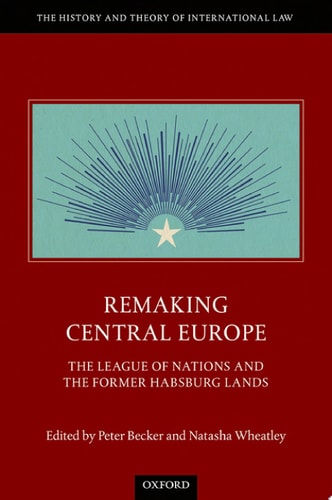
Remaking Central Europe
0
0
As an Amazon Associate and affiliate partner, Menrva Books earns from qualifying purchases. Learn more
Author Description
Over The Last Two Decades, The New International Order Of 1919 Has Grown Into An Expansive New Area Of Research Across Multiple Disciplines. With The League Of Nations At Its Heart, The Interwar Settlement's Innovations In International Organizations, International Law, And Many Other Areas Shaped The World We Know Today. This Book Presents The First Study Of The Relationship Between This New International Order And The New Regional Order In Central And Eastern Europe After The Collapse Of The Habsburg Empire. An Analysis Of The Co-implication Of These Two Orders Is Grounded In Four Key Scholarly Interventions: Understanding The Legacies Of Empire In International Organizations; Examining Regionalism In The Work Of Interwar International Institutions; Creating An Integrated History Of The Interwar Order In Europe; And Testing Recent Claims Of The Conceptual Connection Between Nationalism And Internationalism. With Chapters Covering International Health, International Financial Oversight, Human Trafficking, Minority Rights, Scientific Networks, Technical Expertise, Passports, Commercial Treaties, Borders And Citizenship, And International Policing, This Book Pioneers A Regional Approach To International Order, And Explores The Origins Of Today's Global Governance In The Wake Of Imperial Collapse.
Menrva's Summary
THE THESIS
This book investigates the co-implication of the post-1919 international order and the regional restructuring of Central and Eastern Europe following the collapse of the Habsburg Empire. Natasha Wheatley and Peter W. Becker, both established scholars in modern European history and international law, utilize a multi-disciplinary framework to analyze how interwar institutions functioned as laboratories for global governance. Their argument posits that the regional challenges of the post-imperial landscape were not peripheral but central to the development of modern international legal and administrative norms.
THE SCOPE MAP
What You Will Find
- Analysis of interwar international organizations including the League of Nations.
- Examination of technical expertise in fields such as international health, finance, and policing.
- Historical study of minority rights, citizenship, and border management in post-Habsburg territories.
- Integration of regional history with the broader history of internationalism.
Scope Limits
- The text focuses primarily on the interwar period and does not provide an exhaustive history of the Habsburg Empire itself.
- It does not cover the entirety of global international relations, remaining anchored to the Central and Eastern European context.
THE AUTHORITY PERSPECTIVE
Scholars in the field of diplomatic and legal history identify this work as a significant contribution to the study of international institutional development. Readers frequently note the academic density of the prose and the rigorous archival approach taken by the authors to connect regional politics with global governance structures.
Page Count:
400
Publication Date:
2020-01-01
Publisher:
Oxford University Press
ISBN-10:
0192596934
ISBN-13:
9780192596932
History
European History
20th Century
Diplomatic History
International relations
Community Tags
Similar Books