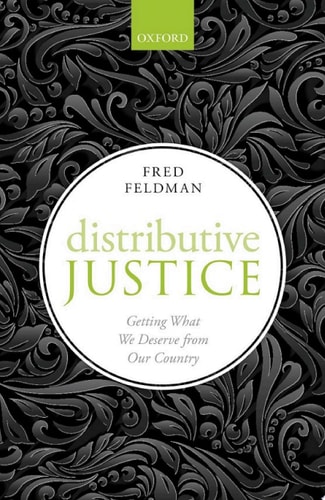
Distributive Justice: Getting What We Deserve From Our Country
0
0
As an Amazon Associate and affiliate partner, Menrva Books earns from qualifying purchases. Learn more
Author Description
This book presents and defends a novel theory of distributive justice, according to which political economic distributive justice reigns in a state if the government of that state ensures that citizens receive the benefits and burdens they deserve from it. The book starts with a more precise characterization of the target of this inquiry - political economic distributive justice. It then proceeds to explicate the concept of desert, evaluate proposed ways of justifying desert claims, formulate a number of desertist theories of justice, and draw out the special features of the version defended here. Once the proposed form of desertism has been stated, its implications are compared to those of egalitarianism, luck egalitarianism, sufficientism, the difference principle, libertarianism, and prioritarianism, with the aim of showing that desertism yields more attractive results in cases that prove difficult for other theories currently being discussed in the literature. Arguments - especially arguments deriving from Rawls -- against desertism are explained and shown to be ineffective. There is discussion of the distinction between comparative and non-comparative justice. Emphasis is placed on the distinction between (a) theories about the moral rightness of distributions, (b) theories about the intrinsic value of distributions, and (c) theories specifically about the justice of distributions. There is discussion of the unfortunate results of confusion of these different sorts of theory. The views of Rawls, Nozick, Parfit, Frankfurt, Feinberg and others are discussed. A version of the method of reflective equilibrium is explained and defended. The book concludes with a series of admissions concerning puzzles that remain unsolved.
Menrva's Summary
THE THESIS
This book investigates the core question of whether political economic distributive justice is best achieved by ensuring citizens receive the benefits and burdens they deserve from their government. Fred Feldman, a philosopher known for his work in value theory and ethics, utilizes a desert-based framework to challenge prevailing theories of justice. He constructs a formal desertist theory and evaluates its efficacy against competing models to argue that desert provides a more robust foundation for state distribution than current alternatives.
THE SCOPE MAP
What You Will Find
- A formal explication of the concept of desert and its application to political economy
- Comparative analysis of desertism against egalitarianism, luck egalitarianism, sufficientism, and libertarianism
- A defense of the method of reflective equilibrium in moral philosophy
- Critical engagement with the works of John Rawls, Robert Nozick, and Derek Parfit
Scope Limits
- The text does not provide a comprehensive policy manual for implementation
- The analysis focuses primarily on theoretical desert rather than empirical sociological data
THE AUTHORITY PERSPECTIVE
Scholars and students of political philosophy frequently note the rigorous analytical density of Feldman's prose. Experts highlight this work as a significant contribution to the ongoing debate regarding desert-based theories in contemporary distributive justice literature.
Page Count:
279
Publication Date:
2016-01-01
Publisher:
OUP Oxford
ISBN-10:
0191085855
ISBN-13:
9780191085857
Philosophy
Political Philosophy
Social justice
Ethics
Community Tags
Similar Books