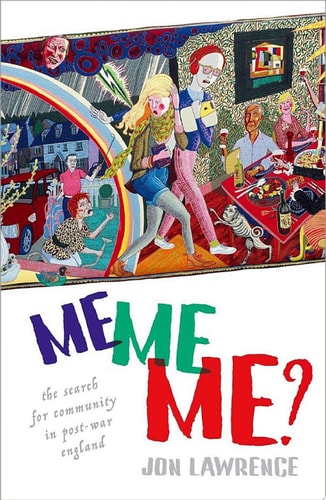
Me, Me, Me: The Search for Community in Post-war England
0
0
As an Amazon Associate and affiliate partner, Menrva Books earns from qualifying purchases. Learn more
Author Description
Many commentators tell us that, in today's world, everyday life has become selfish and atomised--that individuals live only to consume. But are they wrong? In Me, Me, Me, Jon Lawrence re-tells the story of England since the Second World War through the eyes of ordinary people--including his own parents-- to argue that, in fact, friendship, family, and place all remain central to our daily lives, and whilst community has changed, it is far from dead. He shows how, in the years after the Second World War, people came increasingly to question custom and tradition as the pressure to conform to societal standards became intolerable. And as soon as they could, millions escaped the closed, face-to-face communities of Victorian Britain, where everyone knew your business. But this was not a rejection of community per se, but an attempt to find another, new way of living which was better suited to the modern world. Community has become personal and voluntary, based on genuine affection rather than proximity or need. We have never been better connected or able to sustain the relationships that matter to us. Me, Me, Me makes that case that it's time we valued and nurtured these new groups, rather than lamenting the loss of more 'real' forms of community--it is all too easy to hold on to a nostalgic view of the past.
Menrva's Summary
THE THESIS
This book investigates whether the perceived decline of community in post-war England is a factual reality or a misunderstanding of how social bonds have evolved. Jon Lawrence, a historian specializing in modern British social and political history, utilizes a combination of personal family narratives and broader social data to challenge the narrative of atomization. He argues that the shift away from traditional, proximity-based community structures represents a transition toward voluntary, affection-based relationships rather than a total collapse of social cohesion.
THE SCOPE MAP
What You Will Find
- Analysis of social shifts in England from 1945 to the present day.
- Examination of the transition from Victorian-era communal expectations to modern personal autonomy.
- Integration of oral histories and personal accounts, including the author's family experiences.
Scope Limits
- The analysis is geographically restricted to England.
- The text focuses on social and community structures rather than economic or political policy history.
THE AUTHORITY PERSPECTIVE
Historians and sociologists frequently note the book's success in balancing academic rigor with accessible, human-centered storytelling. Experts highlight this as a corrective to nostalgic narratives regarding the supposed loss of community in the twentieth century.
Page Count:
344
Publication Date:
2019-01-01
Publisher:
OUP Oxford
ISBN-10:
0191084980
ISBN-13:
9780191084980
History
European History
Special Topics
Post-War
Great Britain
Sociology
British History
Social Science
Community Tags
Similar Books