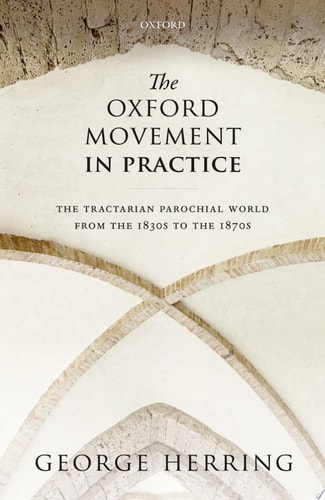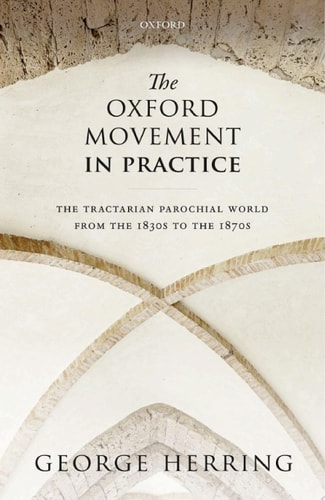
The Oxford Movement in Practice: The Tractarian Parochial World from the 1830s to the 1870s
0
0
As an Amazon Associate and affiliate partner, Menrva Books earns from qualifying purchases. Learn more
Author Description
From its inception what came to be known as the Oxford Movement was always intended to be more than just an abstruse dialogue about the theoretical nature of Anglicanism. Instead, it was meant to spread its ideas not only through college common rooms, but also bishop's palaces, and above all the parsonages of the Church of England. The Oxford Movement in Practice presents an analysis of Tractarianism in the generation after Newman's conversion to Roman Catholicism. While much scholarly work has been done on the Oxford Movement between 1833 and 1845, and on a number of specific individuals or aspects of the Movement after this period, this work adopts a different approach. It examines Tractarianism in the parochial setting, and charts the development of the Movement through its influence on the parishes of the Church of England. George Herring offers detailed explanation of the development of ritualism in the 1860's, and shows how the Ritualists diverted the course the Movement had been taking from 1845.
Menrva's Summary
THE THESIS
This work investigates how the Oxford Movement transitioned from an academic theological debate into a practical, ritualistic force within the parishes of the Church of England between the 1830s and the 1870s. George Herring, a scholar of ecclesiastical history, utilizes archival records and parochial accounts to argue that the movement's true impact was realized not in university common rooms, but in the daily life of local churches. By examining the post-Newman era, the author provides a framework for understanding how Tractarian ideals were implemented and eventually transformed by the rise of ritualism.
THE SCOPE MAP
What You Will Find
- Analysis of the Oxford Movement's influence on Church of England parishes from 1833 to the 1870s.
- Detailed examination of the shift toward ritualism during the 1860s.
- Evaluation of the divergence between early Tractarianism and later ritualist practices.
Scope Limits
- The text focuses primarily on the parochial and practical application of the movement rather than an exhaustive biography of its individual leaders.
- It does not provide a comprehensive history of the movement's theological origins prior to 1833.
THE AUTHORITY PERSPECTIVE
Scholars recognize this work as a significant contribution to the study of Victorian religious life, particularly for its focus on the practical implementation of Tractarianism at the local level. Readers frequently note the academic density of the prose, which makes it a specialized resource for historians of the Church of England.
Page Count:
384
Publication Date:
2016-01-01
Publisher:
OUP Oxford
ISBN-10:
019108221X
ISBN-13:
9780191082214
History
Religion
Theology
Great Britain
19th Century
Anglicanism
Church History
Community Tags
Similar Books