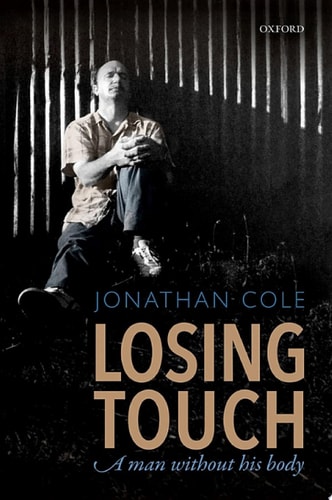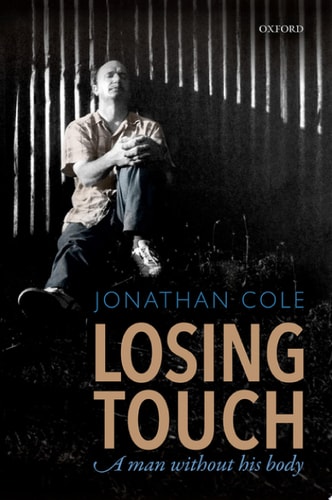
Losing Touch
0
0
As an Amazon Associate and affiliate partner, Menrva Books earns from qualifying purchases. Learn more
Author Description
What Is Like To Live Without Touch Or Movement/position Sense (proprioception)? The Only Way To Understand The Importance Of These Senses, So Familiar We Cannot Imagine Their Absence, Is To Ask Someone In That Position. Ian Waterman Lost Them Below The Neck Over Forty Years Ago, Though Pain And Temperature Perception And His Peripheral Movement Nerves Were Unaffected. Without Proprioceptive Feedback And Touch The Movement Brain Was Disabled. Completely Unable To Move, He Felt Disembodied And Frightened. Then, Slowly, He Taught Himself To Dress, Eat And Walk By Thinking About Each Movement And With Visual Supervision. In Losing Touch, The Narrative Moves Between Biography And Scientific Research, Theatre, Documentary And Zero Gravity. He Has Been Married Three Times, And Built Up Successful Careers In Disability Access Audit, Using His Impairment To His Advantage, And In Rare Turkey Breeding And Journalism. The Neuroscience Has Led To Data On Movement Without Feedback, The Pleasantness Of Touch, Gesture, Pain And Body Orientation In Space. The Account Shows How The Science Was Actually Done But Also Reveals Ian's Journey From Passive Subject To Informed Critic Of Science And Scientists And That The Science Has Given Him Both More Understanding But Also Greater Confidence Personally. His Unique Response To Such A Rare Condition Has Also Led To A Bbc Documentary, Theatrical Portrayals And A Weightless Flight With Nasa. As A Young Man He Sought Triumph Over His Impairment; Now, Nearly 65, He Has More Mature Reflections On Living With Such An Extraordinary Loss, The Limits It Has Imposed And The Opportunities It Has Enabled. He Gives His Views On Scientists And On Others He Has Met Including Oliver Sacks And Peter Brook. In An Afterword Those From Science, The Arts And Philosophy Give An Appreciation Of His Contribution. The Book Is The Result Of Nearly 30 Years Close Collaboration Between Author And Subject.
Menrva's Summary
THE THESIS
This book investigates the fundamental role of proprioception and touch in human movement and identity by documenting the life of Ian Waterman, who lost these senses below the neck. Jonathan J. Cole, a clinical neurophysiologist, utilizes thirty years of close collaboration with Waterman to examine how the brain adapts to the loss of sensory feedback. The text presents a dual-layered argument: it provides empirical data on motor control without proprioception while simultaneously exploring the psychological and social evolution of a man living with an extraordinary physical impairment.
THE SCOPE MAP
What You Will Find
- Detailed analysis of movement without sensory feedback mechanisms.
- Insights into the neuroscience of touch, pain, and body orientation in space.
- Biographical accounts of Waterman's career in disability access, turkey breeding, and journalism.
- Reflections on the intersection of science, philosophy, and the arts.
Scope Limits
- The book focuses specifically on Waterman's unique case of sensory neuropathy and does not serve as a general medical textbook for all forms of paralysis.
THE AUTHORITY PERSPECTIVE
Experts and readers frequently highlight this work as a significant contribution to the study of embodiment and neuroplasticity. The text is noted for its balance between rigorous scientific inquiry and the personal narrative of its subject.
Page Count:
224
Publication Date:
2016-01-01
Publisher:
Oxford University Press
ISBN-10:
0191087696
ISBN-13:
9780191087691
Psychology
Biography
Memoir
Science
Neuroscience
Community Tags
Similar Books