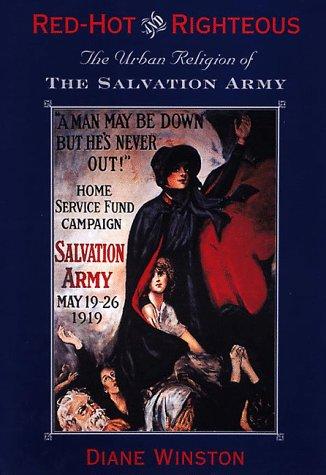
Red-hot and righteous
0
0
As an Amazon Associate and affiliate partner, Menrva Books earns from qualifying purchases. Learn more
Author Description
In this engrossing study of religion, urban life, and commercial culture, Diane Winston shows how a (self-styled "red-hot") militant Protestant mission established a beachhead in the modern city. When The Salvation Army, a British evangelical movement, landed in New York in 1880, local citizens called its eye-catching advertisements "vulgar" and dubbed its brass bands, female preachers, and overheated services "sensationalist." Yet a little more than a century later this ragtag missionary movement had evolved into the nation's largest charitable fund-raiser - the very exemplar of America's most cherished values of social service and religious commitment. Winston illustrates how the Army borrowed the forms and idioms of popular entertainments, commercial emporiums, and master marketers to deliver its message. In contrast to histories that relegate religion to the sidelines of urban society, she shows that Salvationists were at the center of debates about social services for the urban poor, the changing position of women, and the evolution of a consumer culture.
Menrva's Summary
THE THESIS
This book investigates how the Salvation Army, a militant Protestant mission, established a significant presence in late 19th and early 20th century New York City. Diane Winston, drawing on her expertise in religion and urban studies, details how the movement utilized the forms and idioms of popular entertainment, commercial marketing, and master advertisers to disseminate its message. The study contrasts with traditional histories by placing religious movements at the core of urban societal debates, including those concerning social services for the poor, the evolving role of women, and the development of consumer culture.
THE SCOPE MAP
- Analysis of the Salvation Army's arrival in New York in 1880 and its initial reception.
- Examination of the Army's use of popular entertainments and commercial marketing techniques.
- Exploration of the Army's role in debates surrounding social services for the urban poor.
- Discussion of the changing position of women within the movement and society.
- Investigation into the evolution of a consumer culture and the Army's place within it.
- Comparison of the Army's strategies with contemporary religious and social movements.
- Details on the Army's transformation into a major charitable fund-raiser.
THE AUTHORITY PERSPECTIVE
The book is recognized for its engrossing study of religion, urban life, and commercial culture, positioning the Salvation Army at the center of significant societal debates. Winston's work challenges conventional historical narratives by highlighting the movement's active engagement with issues of social service, women's roles, and consumerism. The study effectively illustrates how the Army adapted popular cultural forms to deliver its evangelical message, contributing to its eventual status as a major charitable organization. This approach provides a nuanced understanding of religion's dynamic role within the fabric of modern urban society.
Page Count:
290
Publication Date:
1999-01-01
ISBN-10:
0674867068
Religion
History
Non-Fiction
Urban Studies
American Studies
Social History
Community Tags
Similar Books