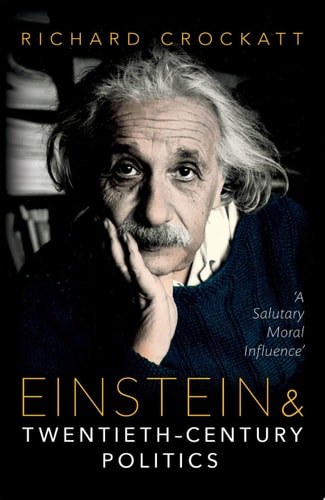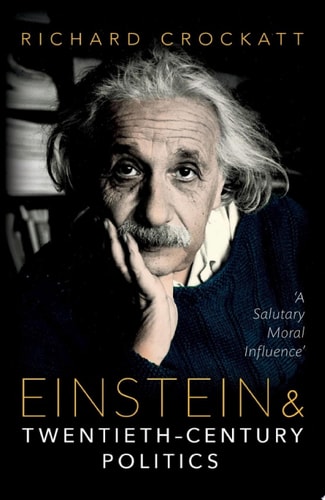
Einstein and Twentieth-Century Politics: 'A Salutary Moral Influence'
0
0
As an Amazon Associate and affiliate partner, Menrva Books earns from qualifying purchases. Learn more
Author Description
Albert Einstein, world-renowned as a physicist, was also publicly committed to radical political views. Despite the vast literature on Einstein, Einstein and Twentieth- Century Politics is the first comprehensive study of his politics, covering his opinions and campaigns on pacifism, Zionism, control of nuclear weapons, world government, freedom, and racial equality. Most studies look at Einstein in isolation but here he is viewed alongside a 'liberal international' of global intellectuals, including Gandhi, Albert Schweitzer, Bertrand Russell, H.G. Wells, George Bernard Shaw, Romain Rolland, Thomas Mann, and John Dewey. Frequently called upon to join campaigns on great issues of war, peace, and social values, they all knew or corresponded with Einstein. This volume examines how Einstein and comparable intellectuals sought to exert a 'salutary influence', as Einstein put it in a letter to Freud. Close attention is given to the unique qualities Einstein brought to his interventions in political debate. His influence derived in the first instance from his celebrity status as the scientist of genius whose theory of relativity was both incomprehensible to most and seemingly relevant to many aspects of aspects of culture and the cosmos. Einstein's complex and enigmatic personality, which combined intense devotion to privacy and a capacity to perform on the public stage, also contributed to the Einstein myth. Studying Einstein's politics, it is argued here, takes us not only into the mind of Einstein but to the heart of the great public issues of the twentieth century.
Menrva's Summary
THE THESIS
This work investigates the intersection of Albert Einstein’s scientific celebrity and his active participation in the major political debates of the twentieth century. Richard Crockatt, an expert in American and international history, utilizes archival correspondence and historical records to argue that Einstein’s political interventions were not isolated acts but part of a broader, interconnected network of global intellectuals. By examining Einstein’s campaigns for pacifism, Zionism, and nuclear disarmament, the author demonstrates how the physicist leveraged his public persona to influence social and political values.
THE SCOPE MAP
What You Will Find
- Analysis of Einstein’s political campaigns regarding pacifism, Zionism, and nuclear control.
- Comparative study of Einstein alongside intellectuals such as Gandhi, Bertrand Russell, and Thomas Mann.
- Examination of the 'liberal international' network of the early to mid-twentieth century.
- Discussion of the 'Einstein myth' and the intersection of celebrity status with political activism.
Scope Limits
- The text does not provide a technical explanation of Einstein’s physical theories.
- It does not serve as a comprehensive biography of Einstein’s personal or family life.
THE AUTHORITY PERSPECTIVE
Scholars and historians recognize this volume as a significant contribution to the study of twentieth-century intellectual history. Readers frequently note the academic rigor of the prose and the depth of the research regarding the collaborative nature of global political movements during this era.
Page Count:
288
Publication Date:
2016-01-01
Publisher:
OUP Oxford
ISBN-10:
0191088307
ISBN-13:
9780191088308
History
Biography
World Civilization
Twentieth Century
Intellectual History
Community Tags
Similar Books