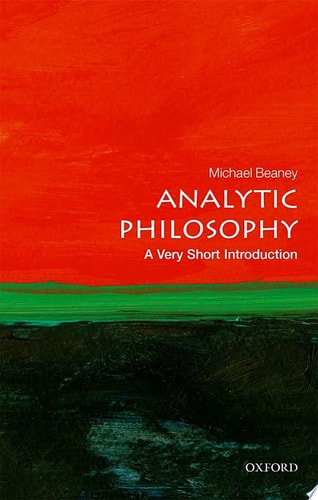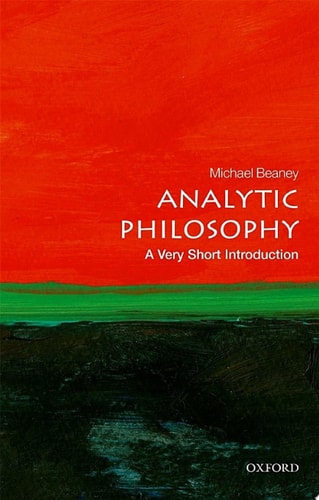
Analytic Philosophy: A Very Short Introduction
0
0
As an Amazon Associate and affiliate partner, Menrva Books earns from qualifying purchases. Learn more
Author Description
Originating in the pioneering work of Gottlob Frege, Bertrand Russell, G. E. Moore, and Ludwig Wittgenstein in the four decades around the turn of the twentieth century, analytic philosophy established itself in various forms in the 1930s. After the Second World War, it developed further in North America, in the rest of Europe, and is now growing in influence as the dominant philosophical tradition right across the world, from Latin America to East Asia. In this Very Short Introduction Michael Beaney introduces some of the key ideas of the founders of analytic philosophy by exploring certain fundamental philosophical questions and showing how those ideas can be used in offering answers. Considering the work of Susan Stebbing, he also explores the application of analytic philosophy to critical thinking, and emphasizes the conceptual creativity that lies at the heart of fruitful analysis. Throughout, Beaney illustrates why clarity of thinking, precision of expression, and rigour of argumentation are rightly seen as virtues of analytic philosophy. ABOUT THE SERIES: The Very Short Introductions series from Oxford University Press contains hundreds of titles in almost every subject area. These pocket-sized books are the perfect way to get ahead in a new subject quickly. Our expert authors combine facts, analysis, perspective, new ideas, and enthusiasm to make interesting and challenging topics highly readable.
Menrva's Summary
THE THESIS
This book investigates the historical development, core methodologies, and global influence of the analytic tradition in philosophy. Michael Beaney, a professor of philosophy, utilizes a historical framework to trace the movement from its origins with Frege and Russell to its current status as a dominant global philosophical tradition. He argues that the movement is defined by a commitment to conceptual clarity, rigorous argumentation, and precision of expression.
THE SCOPE MAP
What You Will Find
- Historical overview of the founders including Frege, Russell, Moore, and Wittgenstein
- Examination of the application of analytic methods to critical thinking
- Analysis of the role of conceptual creativity in philosophical inquiry
- Discussion of the post-WWII expansion of the tradition into North America and beyond
Scope Limits
- Does not provide an exhaustive survey of every contemporary analytic sub-field
- Does not offer a comprehensive critique of non-analytic philosophical traditions
THE AUTHORITY PERSPECTIVE
Readers frequently note the concise yet dense nature of the prose, which effectively condenses complex historical shifts into a brief format. Experts highlight this as a reliable introductory text for students seeking to understand the foundational virtues of the analytic method.
Page Count:
152
Publication Date:
2017-01-01
Publisher:
OUP Oxford
ISBN-10:
0191083917
ISBN-13:
9780191083914
Non-Fiction
Philosophy
Academic
Analytic
Reference