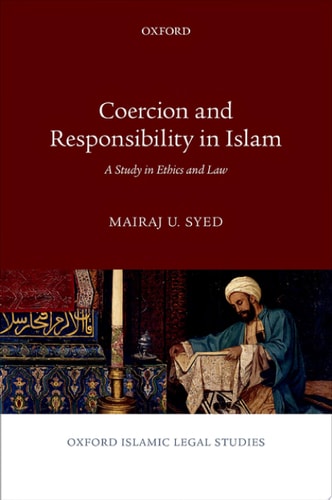
Coercion and Responsibility in Islam
0
0
As an Amazon Associate and affiliate partner, Menrva Books earns from qualifying purchases. Learn more
Author Description
In Coercion And Responsibility In Islam, Mairaj Syed Explores How Classical Muslim Theologians And Jurists From Four Intellectual Traditions Argue About The Thorny Issues That Coercion Raises About Responsibility For One's Action. This Is Done By Assessing Four Ethical Problems: Whether The Absence Of Coercion Or Compulsion Is A Condition For Moral Agency; How The Law Ought To Define What Is Coercive; Coercion's Effect On The Legal Validity Of Speech Acts; And Its Effects On Moral And Legal Responsibility In The Cases Of Rape And Murder. Through A Comparative And Historical Examination Of These Ethical Problems, The Book Demonstrates The Usefulness Of A New Model For Analyzing Ethical Thought Produced By Intellectuals Working Within Traditions In A Competitive Pluralistic Environment. The Book Compares Classical Muslim Thought On Coercion With That Of Modern Western Thinkers On These Issues And Finds Significant Parallels Between Them. The Finding Suggests That A Fruitful Starting Point For Comparative Ethical Inquiry, Especially Inquiry Aimed At The Discovery Of Common Ground For Ethical Action, May Be Found In An Examination Of How Ethicists From Different Traditions Considered Concrete Problems.
Menrva's Summary
THE THESIS
This book investigates how classical Muslim theologians and jurists conceptualized the relationship between coercion and moral or legal responsibility. Mairaj U. Syed, a scholar of Islamic law and ethics, utilizes a comparative historical framework to examine how four distinct intellectual traditions within Islam addressed the complexities of compulsion. The study argues that these historical debates offer a robust model for analyzing ethical thought, particularly when evaluating how different traditions navigate competitive pluralistic environments.
THE SCOPE MAP
What You Will Find
- Comparative analysis of four classical Muslim intellectual traditions regarding coercion.
- Examination of moral agency as it relates to the absence of compulsion.
- Legal definitions of coercive acts and their impact on the validity of speech.
- Case studies involving the application of responsibility in instances of rape and murder.
- Comparative synthesis between classical Muslim thought and modern Western ethical frameworks.
Scope Limits
- The text focuses primarily on classical Islamic jurisprudence and theology rather than contemporary political applications.
- It does not provide an exhaustive survey of all Islamic legal schools, focusing instead on the four selected traditions.
THE AUTHORITY PERSPECTIVE
Scholars and students of Islamic law frequently cite this work for its methodological rigor in comparative ethics. Experts highlight the text as a significant contribution to the study of how pre-modern legal systems addressed complex moral dilemmas.
Page Count:
275
Publication Date:
2016-01-01
Publisher:
Oxford University Press
ISBN-10:
0191093084
ISBN-13:
9780191093081
Philosophy
Islamic Studies
Ethics
Legal History
Theology
Community Tags
Similar Books