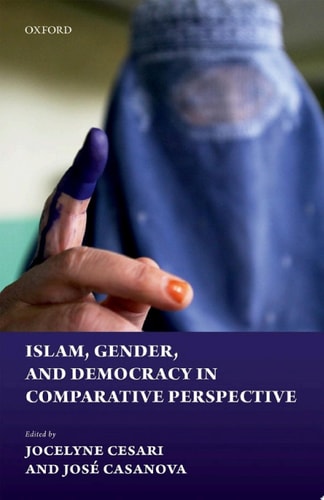
Islam, Gender, and Democracy in Comparative Perspective
0
0
As an Amazon Associate and affiliate partner, Menrva Books earns from qualifying purchases. Learn more
Author Description
The relationship between secularism, democracy, religion, and gender equality has been a complex one across Western democracies and still remains contested. When we turn to Muslim countries, the situation is even more multifaceted. In the views of many western commentators, the question of Women Rights is the litmus test for Muslim societies in the age of democracy and liberalism. Especially since the Arab Awakening, the issue is usually framed as the opposition between liberal advocates of secular democracy and religious opponents of women's full equality. Islam, Gender, and Democracy in Comparative Perspective critically re-engages this too simple binary opposition by reframing the debate around Islam and women's rights within a broader comparative literature. Bringing together leading scholars from a range of disciplines, it examines the complex and contingent historical relationships between religion, secularism, democracy, law, and gender equality. Part One addresses the nexus of religion, law, gender, and democracy through different disciplinary perspectives (sociology, anthropology, political science, law). Part Two localizes the implementation of this nexus between law, gender, and democracy and provides contextualized responses to questions raised in Part One. The contributors explore the situation of Muslim women's rights in minority conditions to shed light on the gender politics in the modernization of the nation and to ponder on the role of Islam in gender inequality across different Muslim countries.
Menrva's Summary
THE THESIS
This book investigates the complex, contingent relationships between religion, secularism, democracy, and gender equality within Muslim-majority societies and minority contexts. Edited by scholars Jocelyne Cesari and José Casanova, the text challenges the binary opposition often presented in Western discourse between secular liberalism and religious conservatism. By synthesizing perspectives from sociology, anthropology, and law, the contributors argue that the status of women's rights is not merely a product of religious doctrine but a result of historical, political, and legal modernization processes.
THE SCOPE MAP
What You Will Find
- Comparative analysis of gender politics across various Muslim-majority nations.
- Theoretical frameworks bridging sociology, law, and political science.
- Case studies examining the implementation of gender rights in minority and majority contexts.
- Historical context regarding the Arab Awakening and its impact on gender discourse.
Scope Limits
- The text does not provide a singular, universal solution to gender inequality in Muslim societies.
- It does not focus on theological debates in isolation, but rather on the intersection of law and political structure.
THE AUTHORITY PERSPECTIVE
Experts identify this collection as a significant contribution to the comparative study of religion and politics, noting its success in moving beyond simplistic cultural essentialism. Readers frequently highlight the academic density of the prose, which makes it a valuable resource for researchers and students of political sociology.
Page Count:
319
Publication Date:
2017-01-01
Publisher:
OUP Oxford
ISBN-10:
0191092878
ISBN-13:
9780191092879
Religion
Special Topics
Muslim Women
Gender Studies
Religion and Law
Democracy
Women in Islam
Woman Studies
Sociology
Islamic Countries
Islam
Community Tags
Similar Books