Author Description
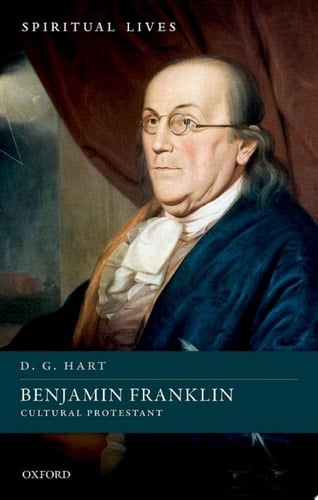
Benjamin Franklin grew up in a devout Protestant family with limited prospects for wealth and fame. By hard work, limitless curiosity, native intelligence, and luck (what he called "providence"), Franklin became one of Philadelphia's most prominent leaders, a world recognized scientist, and the United States' leading diplomat during the War for Independence. Along the way, Franklin embodied the Protestant ethics and cultural habits he learned and observed as a youth in Puritan Boston. Benjamin Franklin: Cultural Protestant follows Franklin's remarkable career through the lens of the trends and innovations that the Protestant Reformation started (both directly and indirectly) almost two centuries earlier. His work as a printer, civic reformer, institution builder, scientist, inventer, writer, self-help dispenser, politician, and statesmen was deeply rooted in the culture and outlook that Protestantism nurtured. Through its alternatives to medieval church and society, Protestants built societies and instilled habits of character and mind that allowed figures such as Franklin to build the life that he did. Through it all, Franklin could not assent to all of Protestantism's doctrines or observe its worship, but for most of his life he acknowledged his debt to his creator, revelled in the natural world guided by providence, and conducted himself in a way (imperfectly) to merit divine approval. In this biography, D. G. Hart recognizes Franklin as a cultural or non-observant Protestant, someone who thought of himself as a Presbyterian, ordered his life as other Protestants did, sometimes went to worship services, read his Bible, and prayed, but could not go all the way and join a church.
Menrva's Summary
THE THESIS
This biography investigates the extent to which Benjamin Franklin’s life and achievements were shaped by the cultural and ethical framework of Protestantism despite his personal detachment from orthodox doctrine. D. G. Hart, a historian of American religion, utilizes Franklin’s career as a printer, scientist, and statesman to argue that his habits of mind and civic contributions were deeply rooted in the legacy of the Protestant Reformation. The text examines how Franklin navigated the tension between his non-observant personal faith and the pervasive Protestant culture of colonial America.
THE SCOPE MAP
What You Will Find
- An analysis of Franklin’s career through the lens of Protestant cultural habits.
- Historical context regarding the influence of the Reformation on 18th-century civic and social institutions.
- Examination of Franklin’s personal writings, including his views on providence and divine approval.
Scope Limits
- The book does not provide a comprehensive chronological account of every political event in Franklin’s life.
- It does not attempt to categorize Franklin as a traditional or orthodox believer.
THE AUTHORITY PERSPECTIVE
Scholars and readers often note that this work provides a nuanced perspective on the intersection of secular achievement and religious heritage in early American history. Experts highlight the text as a useful contribution to understanding the cultural, rather than strictly theological, dimensions of Protestantism in the Enlightenment era.
Page Count:
272
Publication Date:
2021-01-01
Publisher:
OUP Oxford
ISBN-10:
0191093408
ISBN-13:
9780191093401
History
Biography
Religion
Protestantism
United States
American History
Community Tags
Similar Books