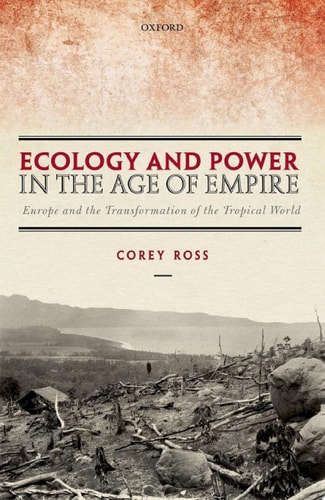
Ecology and Power in the Age of Empire: Europe and the Transformation of the Tropical World
0
0
As an Amazon Associate and affiliate partner, Menrva Books earns from qualifying purchases. Learn more
Author Description
Ecology and Power in the Age of Empire provides the first wide-ranging environmental history of the heyday of European imperialism, from the late nineteenth century to the end of the colonial era. It focuses on the ecological dimensions of the explosive growth of tropical commodity production, global trade, and modern resource management-transformations that still visibly shape our world today-and how they were related to broader social, cultural, and political developments in Europe's colonies. Covering the overseas empires of all the major European powers, Corey Ross argues that tropical environments were not merely a stage on which conquest and subjugation took place, but were an essential part of the colonial project, profoundly shaping the imperial enterprise even as they were shaped by it. The story he tells is not only about the complexities of human experience, but also about people's relationship with the ecosystems in which they were themselves embedded: the soil, water, plants, and animals that were likewise a part of Europe's empire. Although it shows that imperial conquest rarely represented a sudden bout of ecological devastation, it nonetheless demonstrates that modern imperialism marked a decisive and largely negative milestone for the natural environment. By relating the expansion of modern empire, global trade, and mass consumption to the momentous ecological shifts that they entailed, this book provides a historical perspective on the vital nexus of social, political, and environmental issues that we face in the twenty-first-century world.
Menrva's Summary
THE THESIS
This book investigates how the expansion of European imperialism between the late nineteenth century and the end of the colonial era fundamentally transformed tropical ecosystems and global resource management. Corey Ross, a historian specializing in modern European and global history, utilizes a wide-ranging synthesis of archival research and environmental data to argue that the natural world was an active participant in the colonial project rather than a passive backdrop. He posits that the drive for tropical commodities and mass consumption established a persistent, often detrimental, environmental legacy that continues to influence contemporary ecological and political conditions.
THE SCOPE MAP
What You Will Find
- Analysis of the ecological impact of global trade and resource extraction in tropical colonies.
- Examination of the relationship between colonial administration and environmental management practices.
- Comparative study of the overseas empires of major European powers.
Scope Limits
- The text focuses primarily on the era of high imperialism and does not provide an exhaustive study of pre-colonial environmental states.
- It does not offer a comprehensive analysis of every individual colony, focusing instead on broader imperial trends and systemic shifts.
THE AUTHORITY PERSPECTIVE
Scholars and historians frequently cite this work as a significant contribution to the field of environmental history for its broad geographical scope and integration of political and ecological analysis. Readers often note the academic density of the prose, which provides a rigorous framework for understanding the long-term consequences of colonial resource exploitation.
Page Count:
487
Publication Date:
2017-01-01
Publisher:
OUP Oxford
ISBN-10:
0191091979
ISBN-13:
9780191091971
History
Human ecology
Geography
Environmental History
Global Trade
Imperialism
Colonialism
Modern History