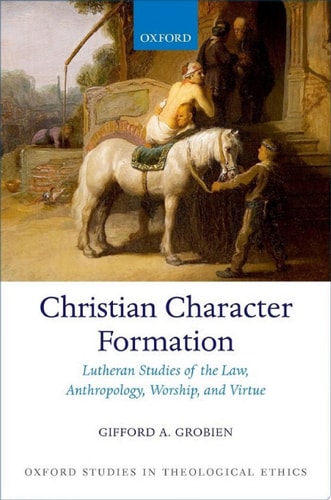
Christian Character Formation: Lutheran Studies of the Law, Anthropology, Worship, and Virtue
0
0
As an Amazon Associate and affiliate partner, Menrva Books earns from qualifying purchases. Learn more
Author Description
Christian Character Formation investigates worship and formation in view of Christian anthropology, particularly union with Christ. Traditions which value justification by faith wrestle to some degree with how to describe and encourage ethical formation when salvation and righteousness are presented as gracious and complete. The dialectic of law and gospel has suggested to some that forgiveness and the advocacy of ethical norms contend with each other. By viewing justification and formation in light of Christ's righteousness which is both imputed and imparted, it is more readily seen that forgiveness and ethics complement each other. In justification, God converts a person, by which he grants new character. Traditional Lutheran anthropology says that this regeneration grants a new nature in mystical union with Jesus Christ. By exploring the Finnish Luther School led by Tuomo Mannermaa, Gifford A. Grobien explains how union with Christ imparts righteousness and the corresponding new character to the believer. Furthermore, as means of grace, the Word and sacraments are the means of establishing union with Christ and nurturing new character. Considering Oswald Bayer's "suffering" the word of Christ, Louis-Marie Chauvet's "symbolic order" and Bernd Wannenwetsch's understanding of worship as Christianity's unique "form of life," Grobien argues that worship practices are the foundational and determinative context in which grace is offered and in which the distinctively Christian ethos supports virtues consistent with Christian character. This understanding is also coordinated with Stanley Hauerwas's narrative ethics and Luther's teaching of virtue and good works in view of the Ten Commandments.
Menrva's Summary
THE THESIS
This work investigates how Christian character is formed through the intersection of justification by faith, union with Christ, and the practices of worship. Gifford A. Grobien, a scholar of theological ethics, examines the perceived tension between the Lutheran emphasis on gracious justification and the necessity of ethical formation. By utilizing the framework of the Finnish Luther School and the concept of mystical union with Christ, the author argues that righteousness is both imputed and imparted, thereby reconciling forgiveness with the development of a Christian ethos.
THE SCOPE MAP
What You Will Find
- Analysis of the Finnish Luther School and the work of Tuomo Mannermaa
- Theological synthesis of justification, anthropology, and virtue ethics
- Examination of worship as a foundational context for ethical formation
- Integration of perspectives from Oswald Bayer, Louis-Marie Chauvet, and Bernd Wannenwetsch
Scope Limits
- The text focuses primarily on Lutheran theological traditions and may not address broader ecumenical perspectives on character formation in equal depth.
THE AUTHORITY PERSPECTIVE
Scholars and theologians recognize this text as a rigorous contribution to the field of Lutheran ethics and the study of Christian character. Readers frequently note the academic density of the prose and the author's precise engagement with complex theological debates regarding the law and the gospel.
Page Count:
259
Publication Date:
2019-01-01
Publisher:
OUP Oxford
ISBN-10:
0191091391
ISBN-13:
9780191091391
Religion
Virtue Ethics
Anthropology
Mystical union
Theology
Worship
Lutheran Studies
Christian ethics
Community Tags
Similar Books