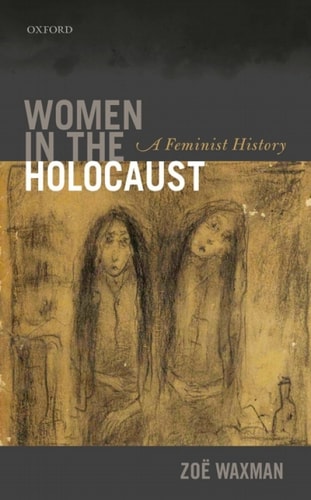
Women in the Holocaust: A Feminist History
0
0
As an Amazon Associate and affiliate partner, Menrva Books earns from qualifying purchases. Learn more
Author Description
Despite some pioneering work by scholars, historians still find it hard to listen to the voices of women in the Holocaust. Learning more about the women who both survived and did not survive the Nazi genocide -- through the testimony of the women themselves -- not only increases our understanding of this terrible period in history, but makes us rethink our relationship to the gendered nature of knowledge itself. Women in the Holocaust is about the ways in which socially- and culturally-constructed gender roles were placed under extreme pressure; yet also about the fact that gender continued to operate as an important arbiter of experience. Indeed, paradoxically enough, the extreme conditions of the Holocaust -- even of the death camps -- may have reinforced the importance of gender. Whilst Jewish men and women were both sentenced to death, gender nevertheless operated as a crucial signifier for survival. Pregnant women as well as women accompanied by young children or those deemed incapable of hard labour were sent straight to the gas chambers. The very qualities which made them women were manipulated and exploited by the Nazis as a source of dehumanization. Moreover, women were less likely to survive the camps even if they were not selected for death. Gender in the Holocaust therefore became a matter of life and death.
Menrva's Summary
THE THESIS
This work investigates how gender functioned as a critical determinant of survival and experience for women during the Nazi genocide. Author Zoë Vania Waxman, a scholar specializing in Holocaust history and testimony, utilizes a gender-focused analytical framework to challenge traditional historical narratives. By centering the voices and testimonies of women, the book argues that gender roles were not erased by the extreme conditions of the Holocaust but were instead exploited and reinforced as mechanisms of dehumanization and selection.
THE SCOPE MAP
What You Will Find
- Analysis of gendered survival rates in concentration and death camps
- Examination of Nazi selection processes targeting pregnant women and mothers
- Integration of primary source testimonies from female survivors
- Theoretical discussion on the gendered nature of historical knowledge
Scope Limits
- Does not provide a comprehensive military history of the Holocaust
- Does not focus on the experiences of male victims except as a point of comparison
THE AUTHORITY PERSPECTIVE
Scholars recognize this text as a significant contribution to gender-inclusive Holocaust historiography. Readers frequently note the academic rigor and the author's success in elevating marginalized voices within the historical record.
Page Count:
192
Publication Date:
2017-01-01
Publisher:
OUP Oxford
ISBN-10:
0191090700
ISBN-13:
9780191090707
History
Women
Gender Studies
Women Studies
Jewish History
Community Tags
Similar Books