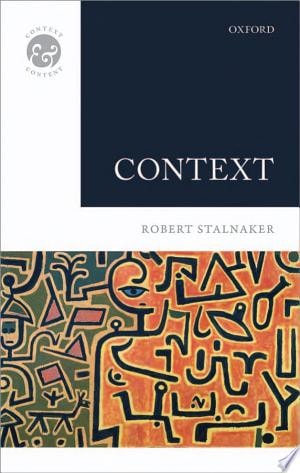
Context
0
0
As an Amazon Associate and affiliate partner, Menrva Books earns from qualifying purchases. Learn more
Author Description
Robert Stalnaker Explores The Notion Of The Context In Which Speech Takes Place, Its Role In The Interpretation Of What Is Said, And In The Explanation Of The Dynamics Of Discourse. He Distinguishes Different Notions Of Context, But The Main Focus Is On The Notion Of Context As Common Ground, Where The Common Ground Is An Evolving Body Of Background Information That Is Presumed To Be Shared By The Participants In A Conversation. The Common Ground Is The Information That Is Presupposed By Speakers And Addressees, And A Central Concern Of This Book Is With The Notion Of Presupposition, And With The Interaction Of Compositional Structure With Discourse Dynamics In The Explanation Of Presuppositional Phenomena. Presupposed Information Includes Background Information Both About The Subject Matter Of A Discourse And About The Evolving Discourse Itself, And About The Attitudes Of The Participants In The Discourse, Including Who And Where They Are, And What They Agree And Disagree About. Stalnaker Provides A Way Of Representing Self-locating Information That Helps To Explain How It Can Be Shared And Communicated, And How It Evolves Over Time. He Discusses The Semantic And Pragmatics Of Conditionals And Epistemic Modals, And Their Role In Representing Agreement, Disagreement, And The Negotiation About How A Context Should Evolve. The Book Concludes With A Discussion Of The Relations Between Contextualism And Semantic Relativism. The Context And Content Series Is A Forum For Outstanding Original Research At The Intersection Of Philosophy, Linguistics, And Cognitive Science. The General Editor Is François Recanati (institut Jean-nicod, Paris).
Menrva's Summary
THE THESIS
This book investigates the nature of context in human discourse and its fundamental role in the interpretation of speech and the dynamics of communication. Robert Stalnaker, a prominent philosopher of language, utilizes a framework centered on the concept of 'common ground'—the evolving body of shared background information between participants. He argues that understanding presupposition is essential to explaining how compositional structure interacts with discourse dynamics to facilitate successful communication.
THE SCOPE MAP
What You Will Find
- Analysis of common ground as a shared information state
- Theoretical framework for presupposition and its interaction with discourse
- Formal representation of self-locating information
- Examination of the semantics and pragmatics of conditionals and epistemic modals
- Discussion on the relationship between contextualism and semantic relativism
Scope Limits
- The text focuses primarily on formal philosophical and linguistic analysis rather than applied sociolinguistics
- It does not provide a comprehensive history of pragmatics, focusing instead on the author's specific theoretical contributions
THE AUTHORITY PERSPECTIVE
Experts recognize this work as a foundational text for understanding the formal pragmatics of discourse and the mechanics of shared information. Readers frequently note the academic density of the prose, which requires a strong background in analytic philosophy or formal linguistics to fully synthesize the arguments presented.
Page Count:
240
Publication Date:
2014-01-01
Publisher:
Oup Oxford
ISBN-10:
0191502812
ISBN-13:
9780191502811
Philosophy
Pragmatics
Semantics
Linguistics
Philosophy of
Community Tags
Other Editions(4)

Similar Books




Reader Comments
Share Your Thoughts
No comments yet. Be the first to share your thoughts!