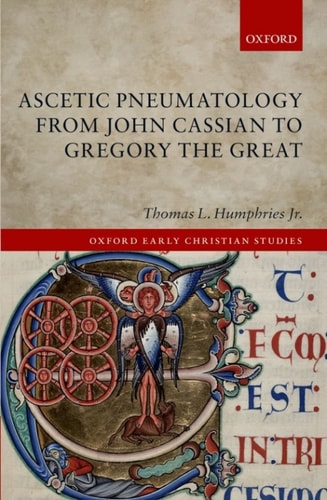
Ascetic Pneumatology from John Cassian to Gregory the Great
0
0
As an Amazon Associate and affiliate partner, Menrva Books earns from qualifying purchases. Learn more
Author Description
Ascetic Pneumatology from John Cassian to Gregory the Great presents three interconnected arguments. The first argument concerns scholarly readings of antiquity: there are developments in 5th and 6th century Latin pneumatology which we have overlooked. Theologians like John Cassian and Gregory the Great were engaged in a significant discussion of how the Holy Spirit works within Christian ascetics to reform their inner lives. Other theologians, like Leo the Great, participate to a lesser extent in a similar project. They applied pneumatology to theological anthropology. Thomas L. Humphries, Jr. labels that development "ascetic pneumatology," and beings to track some of the late antique schools of thought about the Holy Spirit. The second argument concerns the reception of Augustine in the two centuries immediately after his death: different people read Augustine differently. Augustine's theology was known and understood to varying degrees in various regions. Humphries demonstrates significant engagements with Augustine's theology as it was relevant to Pelagianism (evidenced in Prosper of Aquitaine), as it was relevant to Gallic Arians (evidenced with the Lérinian theologians), and as it was relevant to African Arians and certain questions posed of Nestorianism (evidenced with Fulgentius of Ruspe). Instead of attempting to rank various theologians as better and worse "Augustinians," Humphries argues that there were different kinds of "Augustinianisms" even in the years immediately after Augustine. The third argument concerns Gregory the Great and his sources. Once we see that ascetic pneumatology was a strain of thought in this era and see that there are different kinds of Augustinianisms, we can see that Gregory depends on both Augustine and Cassian. In the closing chapters, Humphries argues that Gregory uses Cassian's ascetic pneumatology, and this allows Gregory's synthesis of Cassian and Augustine to stand in greater relief than it has before.
Menrva's Summary
THE THESIS
This work investigates the development of ascetic pneumatology in Latin theology between the 5th and 6th centuries, specifically examining how the Holy Spirit was understood to reform the inner lives of ascetics. Thomas L. Humphries Jr. utilizes a rigorous historical-theological framework to analyze the writings of figures such as John Cassian, Leo the Great, and Gregory the Great. By tracing these intellectual threads, the author argues that late antique theologians engaged in a sophisticated application of pneumatology to theological anthropology, while simultaneously navigating diverse interpretations of Augustinian thought.
THE SCOPE MAP
What You Will Find
- Analysis of 5th and 6th-century Latin pneumatological developments.
- A comparative study of Augustinian reception among various regional theologians.
- Examination of the synthesis between Cassian’s asceticism and Augustinian theology in the works of Gregory the Great.
- Historical context regarding Pelagianism, Arianism, and Nestorianism.
Scope Limits
- The study does not provide a comprehensive history of all late antique pneumatology.
- It does not attempt to rank the theological accuracy of various 'Augustinian' interpretations.
THE AUTHORITY PERSPECTIVE
Scholars in the field of patristics identify this text as a specialized contribution to the study of late antique theological anthropology. Readers frequently note the academic density of the prose, which is intended for an audience familiar with the nuances of Latin theological history.
Page Count:
256
Publication Date:
2013-01-01
Publisher:
OUP Oxford
ISBN-10:
019150808X
ISBN-13:
9780191508080
Religion
Patristics
Philosophy history
Academic
Christian History
Theology
Holy Spirit
Pneumatology
Community Tags
Similar Books