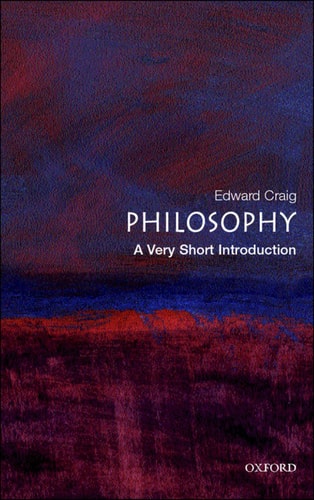
Philosophy: A Very Short Introduction
0
0
As an Amazon Associate and affiliate partner, Menrva Books earns from qualifying purchases. Learn more
Author Description
How ought we to live? What really exists? How do we know? This book introduces important themes in ethics, knowledge, and the self, via readings from Plato, Hume, Descartes, Hegel, Darwin, and Buddhist writers. It emphasizes throughout the point of doing philosophy, explains how different areas of philosophy are related, and explores the contexts in which philosophy was and is done. ABOUT THE SERIES: The Very Short Introductions series from Oxford University Press contains hundreds of titles in almost every subject area. These pocket-sized books are the perfect way to get ahead in a new subject quickly. Our expert authors combine facts, analysis, perspective, new ideas, and enthusiasm to make interesting and challenging topics highly readable.
Menrva's Summary
THE THESIS
This work investigates the fundamental nature of philosophical inquiry by addressing the core questions of existence, knowledge, and ethical conduct. Edward Craig, a distinguished philosopher and academic, utilizes a thematic approach to bridge historical thought with contemporary relevance. By synthesizing the contributions of major thinkers from diverse traditions, he provides a framework for understanding how philosophical concepts interact and evolve within their respective historical contexts.
THE SCOPE MAP
What You Will Find
- Core inquiries into ethics, epistemology, and the philosophy of self
- Comparative analysis of Western and Eastern philosophical traditions
- Contextual examination of seminal texts by Plato, Hume, Descartes, Hegel, and Darwin
Scope Limits
- Does not provide an exhaustive history of philosophy
- Does not offer a comprehensive technical manual for formal logic
THE AUTHORITY PERSPECTIVE
Experts and educators frequently cite this volume as a premier entry point for students and laypeople seeking a structured overview of the discipline. Readers often note the clarity of the prose, which manages to distill complex abstract concepts into accessible arguments without sacrificing intellectual rigor.
Page Count:
144
Publication Date:
2002-01-01
Publisher:
OUP Oxford
ISBN-10:
0191500747
ISBN-13:
9780191500749
Non-Fiction
Politics
Philosophy
Ethics
Epistemology
Kindle Store
Education
Reference
History & Surveys
Categories
Kindle eBooks
Community Tags
Other Editions(4)

Similar Books