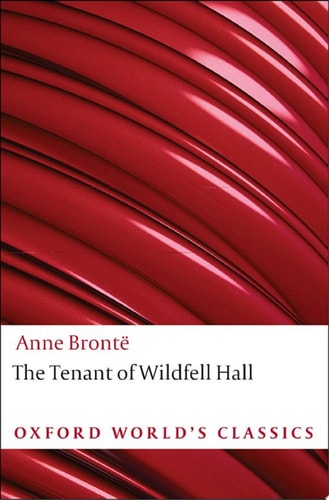
The Tenant of Wildfell Hall
0
0
As an Amazon Associate and affiliate partner, Menrva Books earns from qualifying purchases. Learn more
Author Description
Anne Brontë's second novel seemed to many contemporary readers shockingly unlike her first Agnes Grey, published in the previous year. There, Charlotte Brontë had admired her sister's `quiet description and simple pathos', but she was disturbed by The Tenant of Wildfell Hall, which reminded reviewers of Wuthering Heights: it was, in spite of its `excellent moral', `coarse, not to say brutal'. For Anne's heroine, Helen Huntingdon, having endured too many of the `revolting scenes' deplored by reviewers, leaves her dissolute husband in order to earn her own living and rescue her son from his influence. A passionate and courageous challenge to the conventions supposedly upheld by Victorian society and reflected in circulating-library fiction, The Tenant of Wildfell Hall is compelling in its imaginative power, in the bold naturalism of its central scenes, the realism and range of its dialogue, and in its psychological insight into the characters involved in the marital battle. The present text is based on the first edition of July 1848, incorporating authorial corrections from the second edition.
Menrva's Summary
THE PULSE
The arrival of a mysterious widow at the dilapidated Wildfell Hall triggers a series of social upheavals and reveals a history of domestic trauma. Helen Huntingdon, the enigmatic protagonist, seeks to establish an independent life for herself and her young son while escaping the influence of her abusive, alcoholic husband. The narrative employs a complex epistolary and diary-based framework, shifting perspectives to uncover the truth behind Helen's flight and her subsequent interactions with the local community. She faces intense scrutiny and moral judgment from the provincial society of the time, which views her autonomy as a direct threat to established gender roles and marital expectations.
INSIDE THE PAGES
- Epistolary narrative structure utilizing letters and journals
- Multi-layered perspective shifting between primary characters
- Realistic depiction of 19th-century marital law and social constraints
- Exploration of alcoholism and its impact on family stability
- Focus on female economic independence and agency
- Detailed character studies of the landed gentry
- Use of naturalistic dialogue to convey social tension
- Moral critique of Victorian gender double standards
THE COLLECTIVE ECHO
Readers and critics frequently highlight the novel's departure from the romanticized tropes common in Victorian literature, noting its unflinching look at domestic discord. Discussion often centers on the stark realism of the protagonist's struggle, which many find more grounded than the works of her contemporaries. The pacing is often described as deliberate, allowing for deep psychological exploration of the characters involved in the marital conflict. Scholars frequently emphasize the text's role as a bold critique of the legal and social limitations placed upon women during the mid-19th century. The atmosphere is consistently noted for its somber, reflective tone that underscores the gravity of the central themes.
Page Count:
150
Publication Date:
1993-01-01
Publisher:
Oxford University Press, UK
ISBN-10:
0191500291
ISBN-13:
9780191500299
Romance
Social Commentary
Kindle Store
Kindle eBooks
Domestic
Gothic
classic
Categories
Victorian
Community Tags
Similar Books