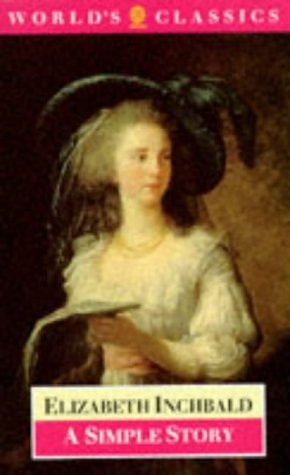
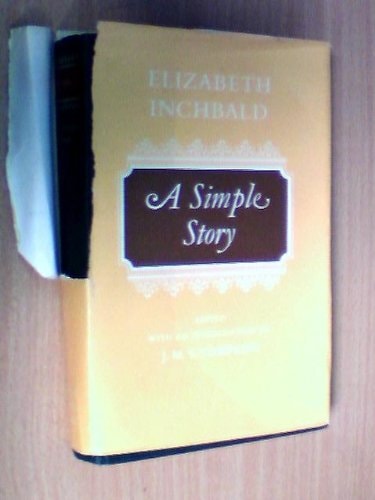
A Simple Story
0
0
As an Amazon Associate and affiliate partner, Menrva Books earns from qualifying purchases. Learn more
Author Description
When Miss Milner announces her passion for her guardian, a Catholic priest, she breaks through the double barrier of religious vocation and society's standards of `proper' womanly behaviour. Her love is legitimized when Dorriforth is released from his vows, but she finds her own unorthodox nature cannot conform to a marriage where her husband continues to be a stern moral guide. With a surenees of touch that prefigures Jane Austen, Elizabeth Inchbald shows that there is no simple answer to their predicament, and that their conflict can only be resolved in the next generation. ABOUT THE SERIES: For over 100 years Oxford World's Classics has made available the widest range of literature from around the globe. Each affordable volume reflects Oxford's commitment to scholarship, providing the most accurate text plus a wealth of other valuable features, including expert introductions by leading authorities, helpful notes to clarify the text, up-to-date bibliographies for further study, and much more.
Menrva's Summary
THE PULSE
Miss Milner initiates a precarious romantic pursuit of her guardian, a Catholic priest, thereby challenging the rigid social and religious constraints of her era. The narrative follows Miss Milner as she attempts to navigate the tension between her impulsive nature and the austere moral expectations imposed by her guardian, Dorriforth. As their relationship evolves from guardianship to marriage, the couple struggles to reconcile their disparate temperaments within the confines of a society that demands strict adherence to gender roles. The story is presented through a third-person perspective that examines the psychological friction between individual desire and institutional duty.
INSIDE THE PAGES
- Exploration of the conflict between personal passion and religious vocation
- Examination of 18th-century social expectations regarding female behavior
- Analysis of the power dynamics inherent in a guardian-ward relationship
- Use of moral dilemmas to drive character development
- Focus on the domestic sphere as a site of psychological tension
- Contrast between impulsive and disciplined personality types
- Intergenerational thematic progression
- Realistic portrayal of marital discord and compromise
THE COLLECTIVE ECHO
Discussion often centers on the novel's status as a precursor to the domestic realism popularized by Jane Austen. Readers frequently highlight the psychological depth Inchbald grants to her female protagonist, noting how the character's flaws make her particularly compelling. Critics often point to the author's ability to balance social commentary with a nuanced portrayal of human fallibility. The pacing is noted for its focus on internal character shifts rather than external action, providing a detailed look at the consequences of social pressure. Many readers find the resolution of the plot to be a thought-provoking commentary on the limitations of the era's moral frameworks.
Page Count:
385
Publication Date:
1998-01-01
Publisher:
OUP Oxford
ISBN-10:
0191605670
ISBN-13:
9780191605673
Romance
English & College Success
Domestic
Historical
classic
18th century
English
Community Tags
Similar Books