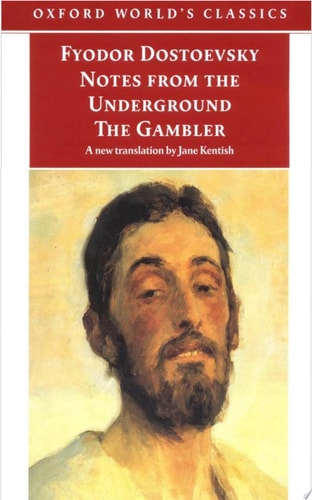
Notes from the Underground and The Gambler
0
0
As an Amazon Associate and affiliate partner, Menrva Books earns from qualifying purchases. Learn more
Author Description
Notes from the Underground (1864) is one of the most profound works of nineteenth-century literature. A probing, speculative book, often regarded as a forerunner of the Existentialist movement, it examines the important political and philosophical questions that were current in Russia and Europe at the time. The Gambler (1866), set in the fictional town of Roulettenberg, explores the compulsive nature of gambling, one of the author's own vices and a subject he describes with extraordinary acumen and drama. Specially commissioned for the World's Classics, this new translation includes a full editorial apparatus. ABOUT THE SERIES: For over 100 years Oxford World's Classics has made available the widest range of literature from around the globe. Each affordable volume reflects Oxford's commitment to scholarship, providing the most accurate text plus a wealth of other valuable features, including expert introductions by leading authorities, helpful notes to clarify the text, up-to-date bibliographies for further study, and much more.
Menrva's Summary
THE PULSE
The central conflict arises from the internal alienation of a retired civil servant and the destructive obsession of a tutor caught in a cycle of addiction. In Notes from the Underground, an unnamed narrator isolates himself from society, using his bitter, introspective monologue to dismantle the rationalist and utopian ideals of his era. In The Gambler, Alexei Ivanovich struggles against his own lack of self-control and the volatile social dynamics of a European spa town, where the pursuit of wealth through chance becomes a surrogate for personal agency. Both narratives utilize first-person perspectives to expose the irrationality and psychological instability inherent in the human condition.
INSIDE THE PAGES
- First-person confessional narrative style
- Exploration of existentialist philosophy and individual autonomy
- Satirical critique of 19th-century Russian intellectual movements
- Psychological examination of compulsive behavior and addiction
- Use of unreliable narrators to challenge reader perception
- Setting contrast between the claustrophobic underground and the frenetic atmosphere of a casino
- Focus on the tension between free will and deterministic social forces
- Integration of autobiographical elements regarding the author's own experiences
THE COLLECTIVE ECHO
Readers and critics frequently identify these works as foundational texts for understanding the development of modern psychological fiction. Discussion often centers on the narrator's intense, often abrasive voice in the first novella and how it serves as a vehicle for radical philosophical inquiry. The second work is often praised for its visceral depiction of the gambling impulse, which many observers note feels authentic due to the author's own history with the vice. Scholars highlight the balance between the dense, argumentative prose of the first story and the more plot-driven, dramatic structure of the second. These texts remain central to academic discourse regarding the limits of human reason and the nature of self-destructive behavior.
Page Count:
319
Publication Date:
1999-01-01
Publisher:
OUP Oxford
ISBN-10:
0191505803
ISBN-13:
9780191505805
Existentialism
Psychological
English & College Success
Russian
Philosophical
English
Classic Literature
Community Tags
Similar Books