
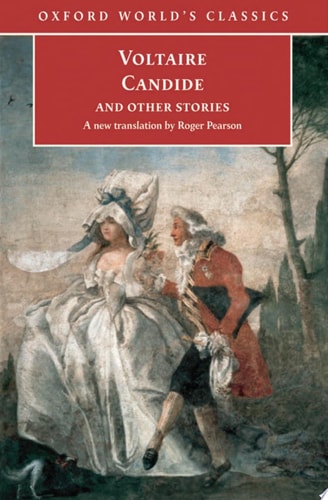
Candide and Other Stories
0
0
As an Amazon Associate and affiliate partner, Menrva Books earns from qualifying purchases. Learn more
Author Description
'If this is the best of all possible worlds, then what must the others be like?' Young Candide is tossed on a hilarious tide of misfortune, experiencing the full horror and injustice of this 'best of all possible worlds' - the Old and the New - before finally accepting that his old philosophy tutor Dr Pangloss has got it all wrong. There are no grounds for his daft theory of Optimism. Yet life goes on. We must cultivate our garden, for there is certainly room for improvement. Candide is the most famous of Voltaire's 'philosophical tales', in which he combined witty improbabilities with the sanest of good sense. First published in 1759, it was an instant bestseller and has come to be regarded as one of the key texts of the Enlightenment. What Candide does for chivalric romance, the other tales in this selection - Micromegas, Zadig, The Ingenu, and The White Bull - do for science fiction, the Oriental tale, the sentimental novel, and the Old Testament. This new edition also includes a verse tale based on Chaucer's The Wife of Bath's Tale, in which we discover that most elusive of secrets: What Pleases the Ladies. ABOUT THE SERIES: For over 100 years Oxford World's Classics has made available the widest range of literature from around the globe. Each affordable volume reflects Oxford's commitment to scholarship, providing the most accurate text plus a wealth of other valuable features, including expert introductions by leading authorities, helpful notes to clarify the text, up-to-date bibliographies for further study, and much more.
Menrva's Summary
THE PULSE
Candide is expelled from his sheltered life in Westphalia and forced to confront the brutal realities of a world that contradicts his tutor's optimistic philosophy. Driven by a series of catastrophic events, the protagonist seeks to reconcile his naive belief that he lives in the best of all possible worlds with the pervasive suffering, war, and injustice he encounters across Europe and South America. The narrative follows a picaresque structure, utilizing rapid-fire pacing and absurd coincidences to expose the logical fallacies of contemporary metaphysical theories. Voltaire employs a detached, ironic tone to critique the social, religious, and political institutions of the eighteenth century.
INSIDE THE PAGES
- Picaresque narrative structure
- Satirical critique of Leibnizian optimism
- Use of irony and hyperbole
- Episodic plot progression
- Philosophical dialogue integrated into action
- Exploration of human suffering and resilience
- Parody of contemporary literary genres
- Emphasis on practical labor over abstract theory
THE COLLECTIVE ECHO
Discussion often centers on the effectiveness of Voltaire's biting wit in dismantling the rigid philosophical dogmas of his time. Readers frequently highlight the stark contrast between the protagonist's initial naivety and the grim, often violent, reality of the world he inhabits. Critics note that the pacing remains brisk, allowing the author to move quickly between various social targets without becoming bogged down in heavy exposition. The concluding message regarding the necessity of cultivating one's own garden remains a frequent point of analysis for those examining the text's pragmatic approach to existence. The collection is widely regarded as a foundational work for understanding the intellectual climate of the Enlightenment period.
Page Count:
351
Publication Date:
2006-01-01
Publisher:
OUP Oxford
ISBN-10:
0191604984
ISBN-13:
9780191604980
Satire
English
Classic Literature
Enlightenment
English & College Success
Philosophical
Short Stories
Community Tags
Other Editions(5)

Similar Books







Reader Comments
Share Your Thoughts
No comments yet. Be the first to share your thoughts!